With remote work becoming a permanent fixture for many, the home office has transitioned from an afterthought to one of the most important rooms in the house. However, translating a corporate setup into a home environment often leads to design missteps. A cluttered, poorly planned workspace doesn’t just look bad—it actively drains your cognitive energy, increases stress, and plummets your daily productivity. In this guide, we will unpack the most common home office design mistakes and explore how adopting a minimalist, clean aesthetic can transform your workspace into a haven of focus and efficiency.
Mistake 1: Prioritizing Aesthetics Over Ergonomics
It is incredibly tempting to purchase that sleek, vintage wooden chair or the ultra-modern acrylic desk because they look fantastic on an inspiration board. However, the most critical mistake you can make in a home office is sacrificing ergonomics for aesthetics. A minimalist aesthetic does not mean stripping away comfort; it means finding functional pieces that feature clean lines.
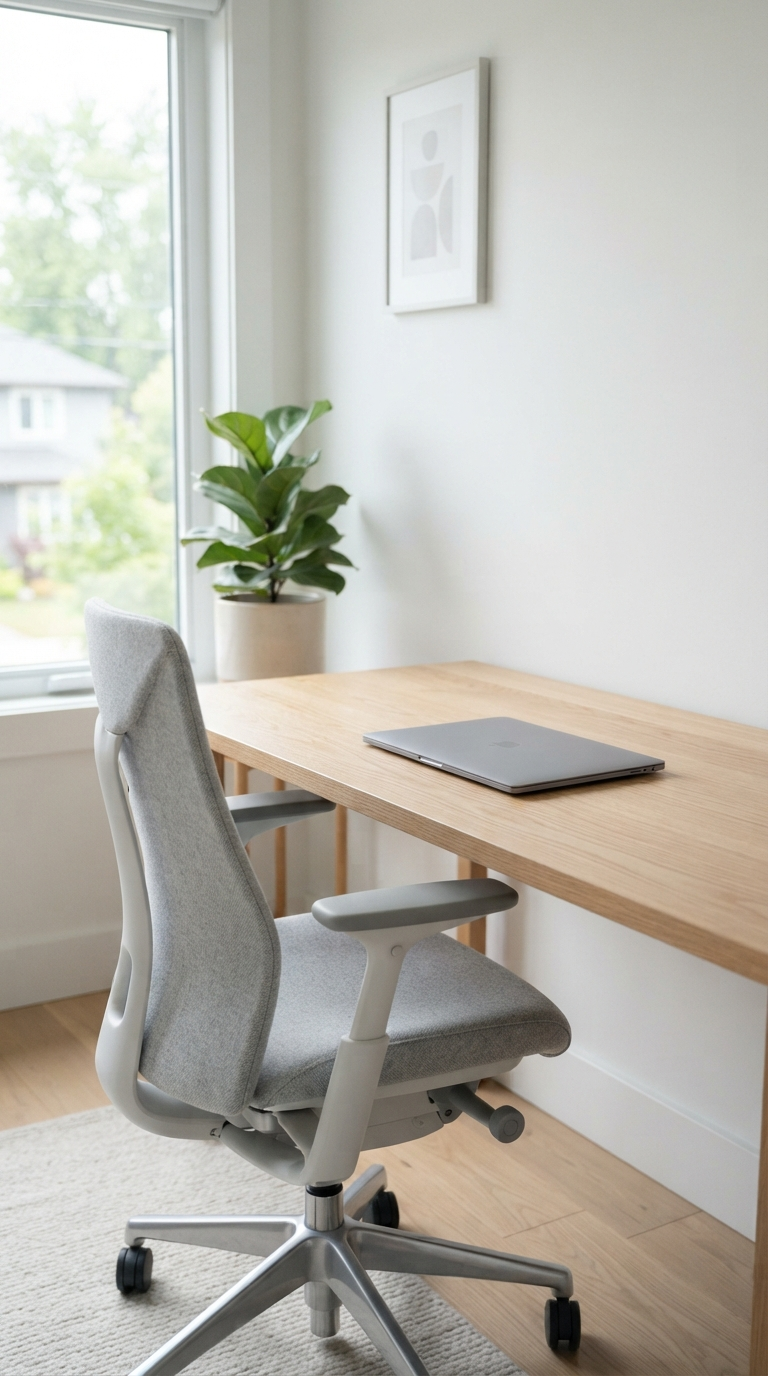
Sitting in a chair that lacks lumbar support or typing at a desk that is the wrong height will lead to chronic pain, which is the ultimate productivity killer. When designing your clean workspace, invest in a high-quality ergonomic chair first. Today, many brands offer ergonomic chairs in sleek, neutral tones like matte white, soft grey, or beige that seamlessly blend into a minimalist environment without looking like a piece of heavy machinery. Ensure your desk allows your elbows to rest at a 90-degree angle, and position your monitor so the top third of the screen is at eye level. Form must always follow function in a workspace.
Mistake 2: Poor Cable Management and Visual Clutter
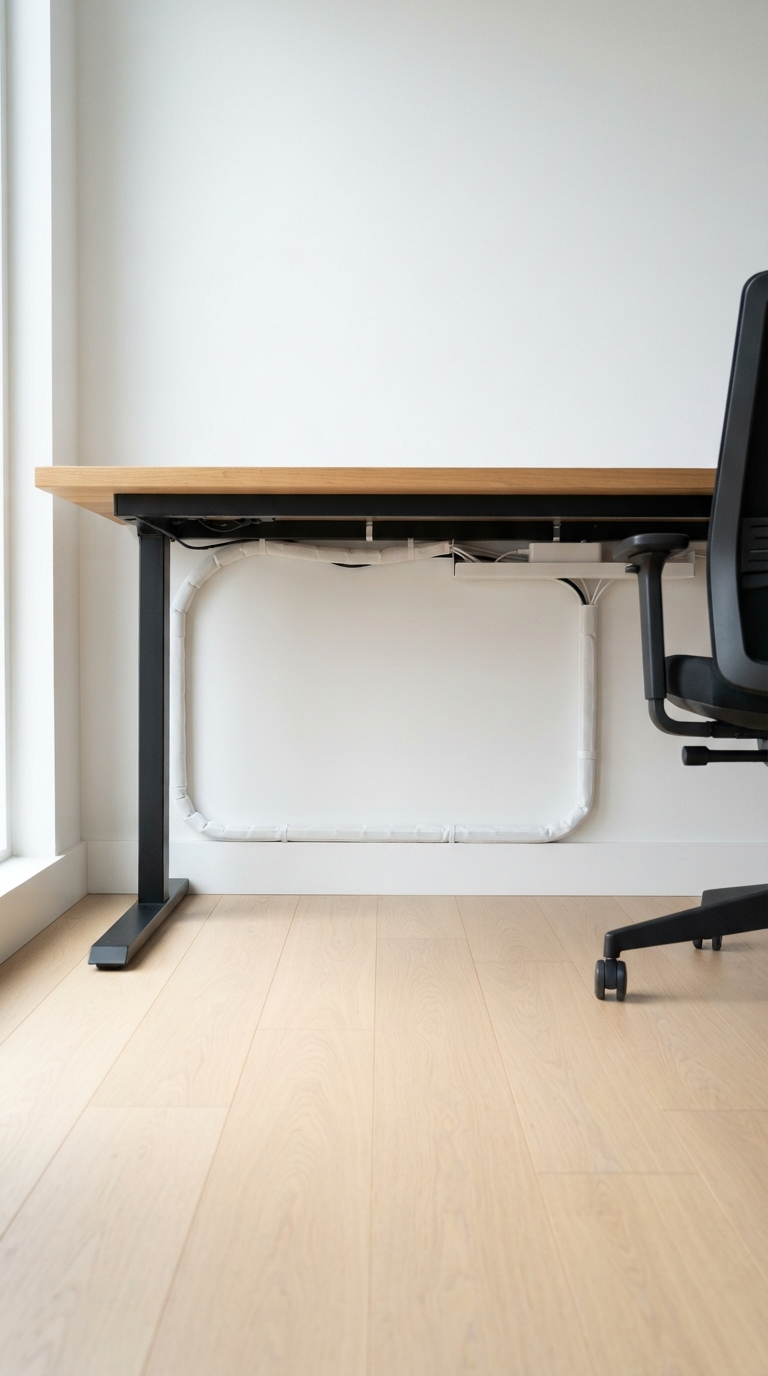
In a minimalist design philosophy, visual clutter equates to mental clutter. Nothing ruins the sleek, clean aesthetic of a beautifully designed home office faster than a tangled rat’s nest of black cables dangling behind your desk. When the brain sees disorganization, it struggles to filter out the unnecessary stimuli, making it harder to focus on the task at hand.
Effective cable management is non-negotiable. Use under-desk cable trays, zip ties, and cord sleeves to bundle wires together and route them invisibly along the legs of your desk. Consider drilling a grommet hole into your desktop to thread cables directly down, keeping the surface immaculate. A clean desk policy—where only your computer, a notebook, and perhaps a single pen remain on the surface at the end of the day—will drastically improve your morning focus. Utilize hidden storage solutions to keep chargers, external hard drives, and office supplies entirely out of sight.
Mistake 3: Relying Solely on Overhead Lighting
Lighting profoundly impacts our mood, energy levels, and circadian rhythms. A glaring mistake in home office design is relying exclusively on the standard, often harsh overhead fixture that came with the house. This type of lighting causes eye strain, creates unappealing shadows during video calls, and fosters a sterile, uninspiring atmosphere.
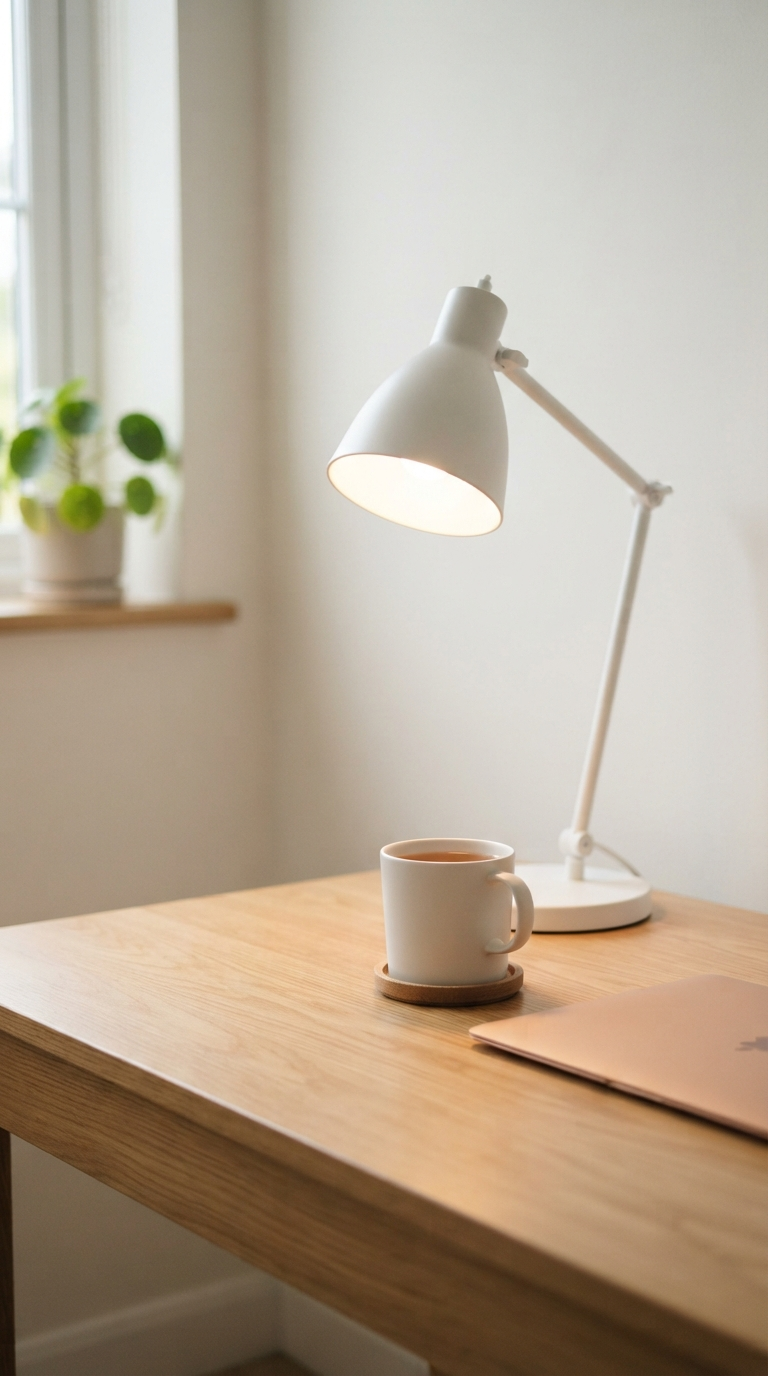
A well-designed minimalist office utilizes layered lighting, prioritizing natural daylight. Position your desk perpendicular to a window if possible; facing the window directly can cause glare, while having it directly behind you creates backlighting issues on camera. Supplement natural light with a sleek, architecturally simple desk lamp featuring an adjustable arm. Opt for LED bulbs with a color temperature around 3000K to 4000K, which mimics crisp daylight and promotes alertness without being overly blue and clinical. The goal is an evenly illuminated space that feels bright, airy, and clean.
Mistake 4: Shoving the Desk Against a Dark Wall
For years, the default home office layout involved pushing a desk flush against a blank wall, often in a dark corner of a spare bedroom. This arrangement is claustrophobic and counterproductive. Staring at a solid wall inches from your face stifles creativity and makes the room feel much smaller than it is.
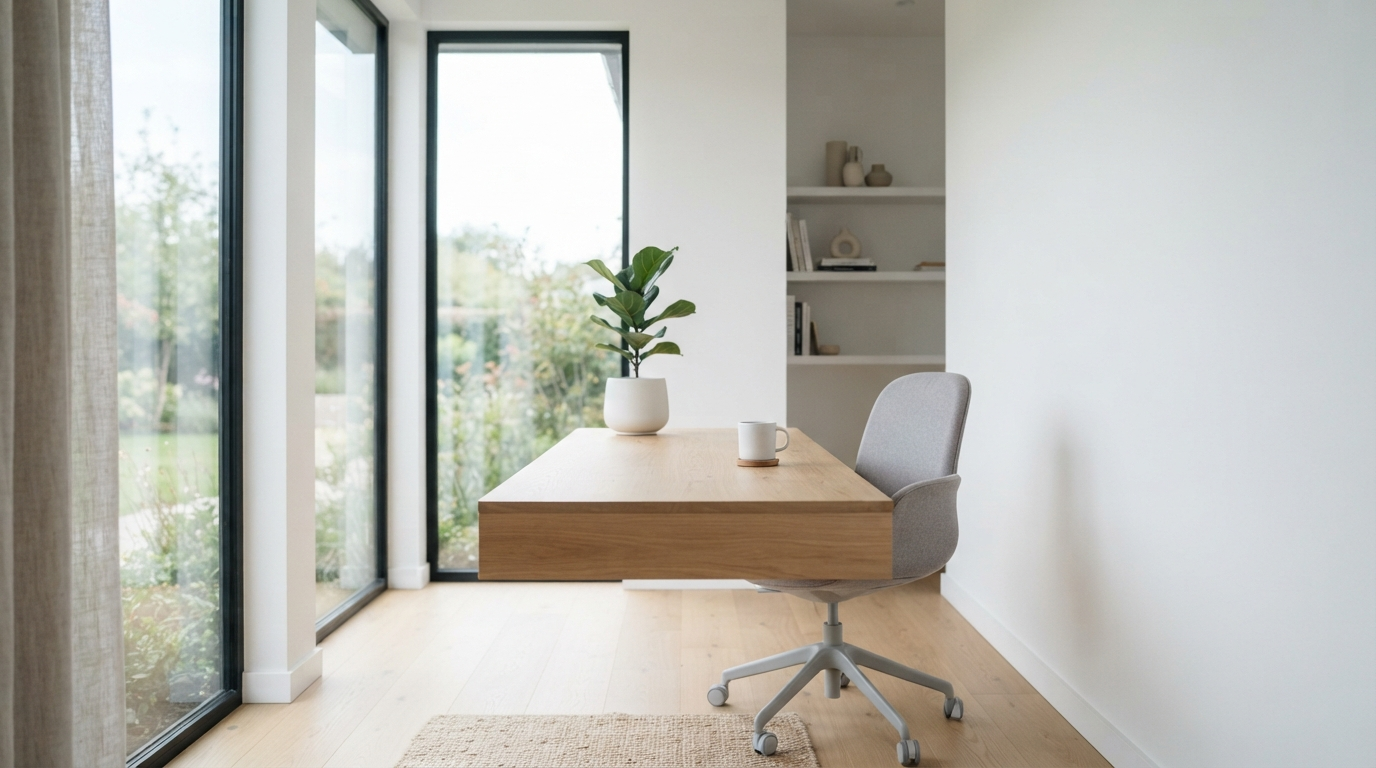
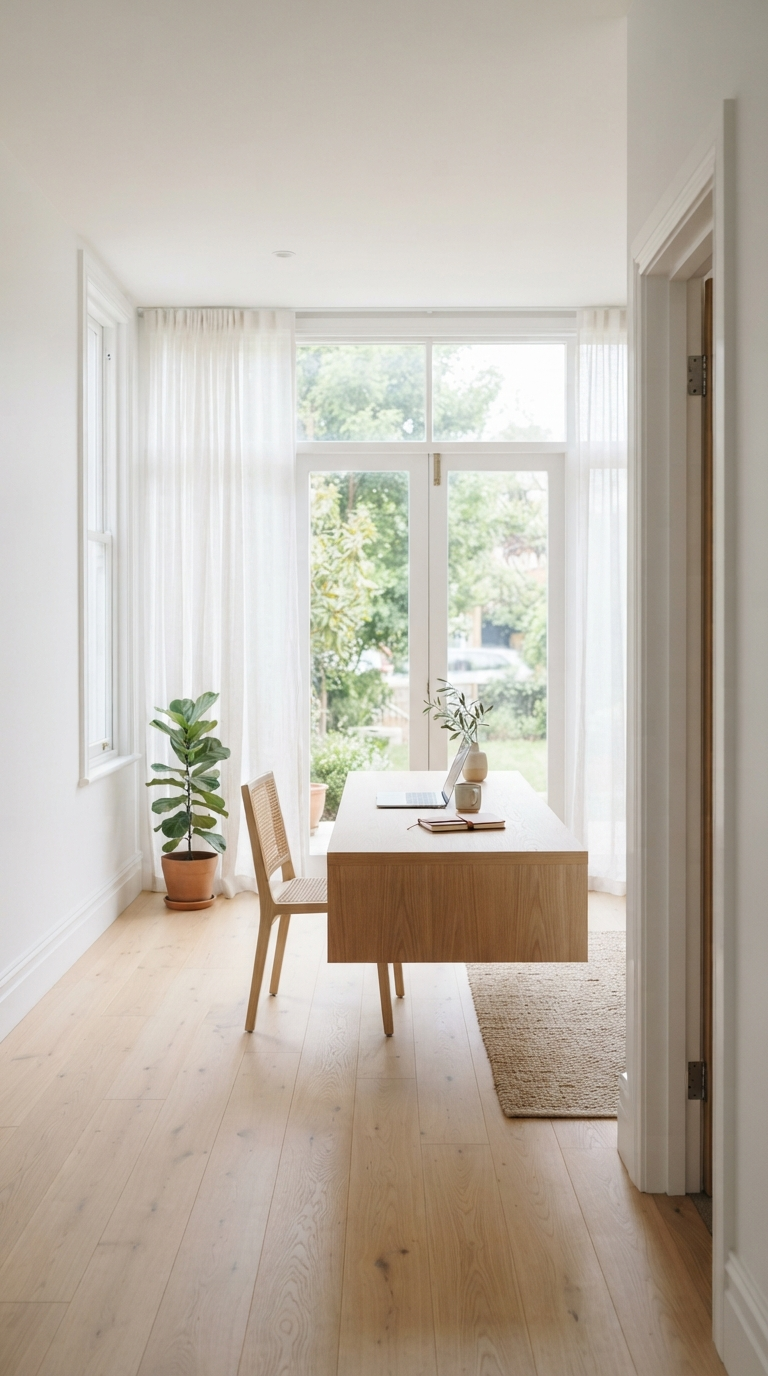
To create a space that fosters clear thinking, try to ‘float’ your desk in the center of the room, facing the door. This layout, known as the ‘command position,’ provides a psychological sense of control and openness. If space constraints dictate that the desk must face a wall, ensure the wall is painted in a bright, clean white or a soft, light neutral. A bright visual field expands the perceived space and keeps your energy elevated throughout the workday. Keep the wall in front of you largely free of distracting artwork; a simple, minimalist calendar or a single, serene art piece is plenty.
Mistake 5: Neglecting Integrated Storage Solutions
A minimalist office isn’t just an empty room; it is a highly organized room. Failing to plan for adequate storage means your clean aesthetic will quickly be buried under piles of mail, contracts, and reference materials. Free-standing, bulky filing cabinets can disrupt the flow of a modern, clean space.
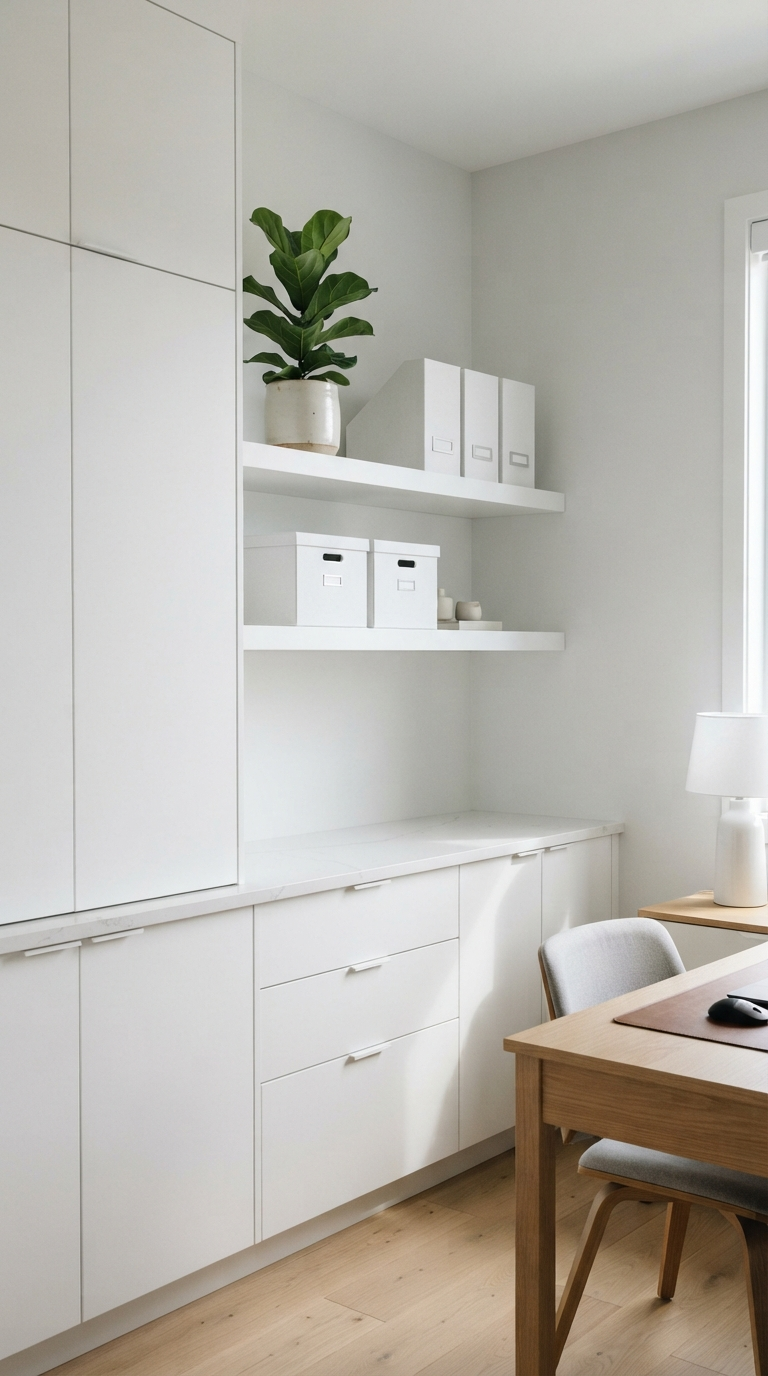
Instead, integrate your storage seamlessly. Opt for sleek, handle-less built-in cabinetry painted the same crisp white as the walls so it virtually disappears. Floating shelves can be used sparingly to display a few curated, inspiring objects or essential books, but they should never be used as a dumping ground. Utilize matching, opaque storage boxes on lower shelves to hide unsightly items while maintaining a cohesive, monochromatic look. When everything has a dedicated, hidden home, maintaining a minimalist environment becomes effortless.
Mistake 6: The Trap of Over-Decorating
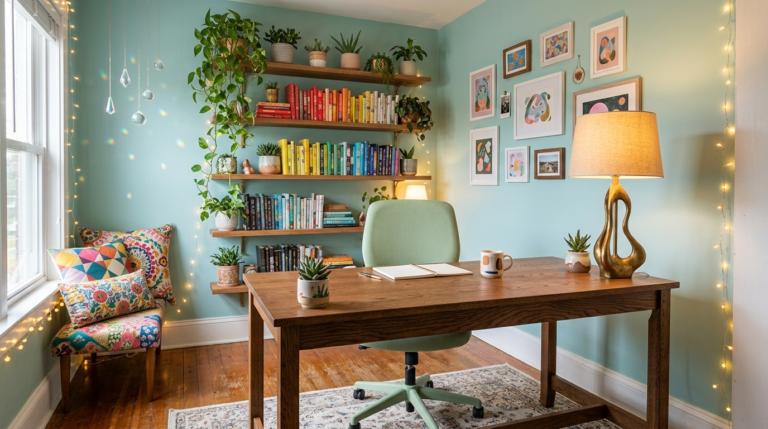
In an effort to make a workspace feel personal and inspiring, many people fall into the trap of over-decorating. Gallery walls packed with motivational quotes, shelves overflowing with knick-knacks, and heavily patterned rugs can create a visually chaotic environment that fights for your attention. Minimalism teaches us the power of restraint.
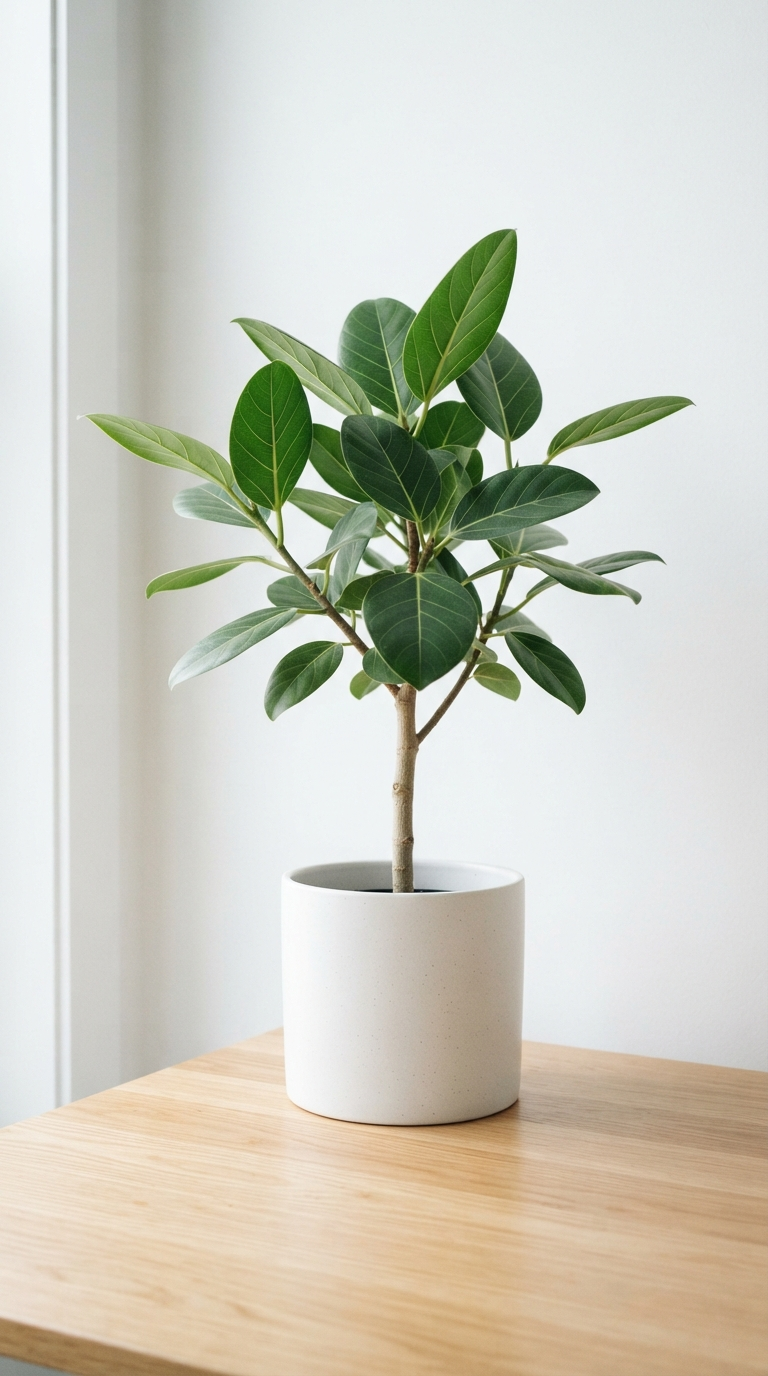
Curate your decor ruthlessly. Choose one or two large, impactful pieces of art rather than a dozen small ones. Introduce life and color through a single, architectural houseplant—like a structural snake plant or a graceful Ficus Audrey—potted in a simple, matte white ceramic planter. Let the clean lines of your furniture and the abundance of natural light be the primary decorative elements. A serene, uncluttered visual environment directly translates to a calm, focused mind.
Conclusion: Designing for Clarity
Creating the perfect home office is an exercise in subtraction rather than addition. By avoiding these common mistakes—poor ergonomics, cable clutter, bad lighting, restrictive layouts, inadequate storage, and over-decorating—you pave the way for a workspace that actively supports your goals. A minimalist, clean home office isn’t just about achieving a specific look; it’s about engineering an environment that fosters clarity, reduces stress, and allows you to do your best work effortlessly. Take a critical look at your current setup today, remove the unnecessary, and watch your productivity soar.
Follow this complete step-by-step guide to create a home office that sparks creativity, boosts focus, and feels like a magical personal sanctuary filled with whimsical charm and smart functionality.