The Living Room That Refused to Stay Beige
It started with a can of paint and a very specific kind of frustration. The living room had been beige for three years — not a warm, considered beige, but the kind of beige that arrives with a rental and never quite leaves. The sofa was serviceable. The curtains were fine. Everything was fine, which is precisely the problem. Fine is not the same as beautiful. Fine is not the same as a room that makes you exhale when you walk into it and think, yes, this is mine.
Budget makeovers are not about settling for less. They are about developing a different kind of creative intelligence — one that looks at a thrift store lampshade and sees a vessel for personality, that recognizes a bolt of fabric remnant as the beginning of a room transformation, that understands the astonishing power of a single can of paint applied with absolute intention. The stories below are real transformations, each achieved for under two hundred dollars, and each one more proof that the greatest design tool you possess is not money — it is a good eye.
The Bedroom: From Bare to Botanical for $87
The bedroom in question had white walls, a secondhand bed frame, and approximately the personality of a guest room in an airport hotel. The owner had roughly ninety dollars and a very clear vision: she wanted it to feel like sleeping inside a forest.
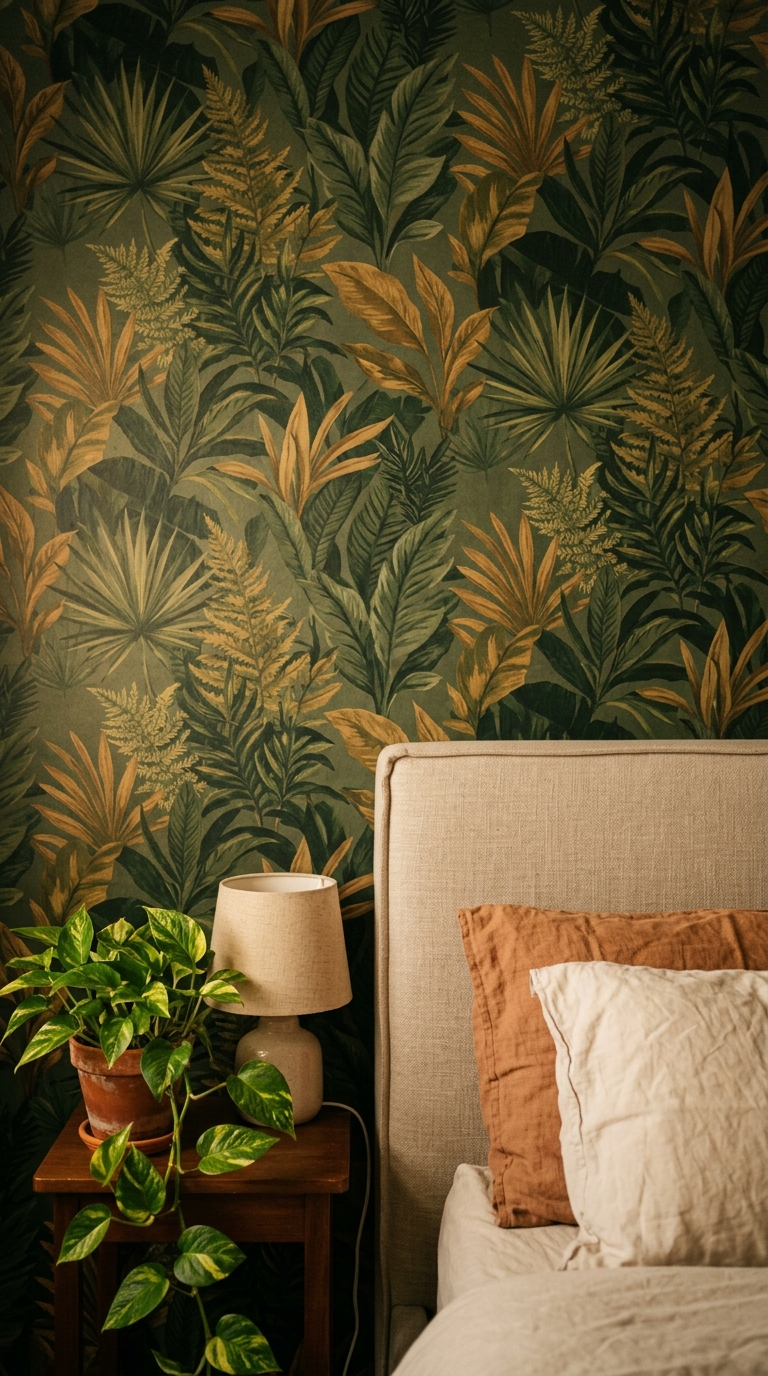
She spent forty dollars on two large rolls of peel-and-stick botanical wallpaper — the kind that comes in wide panels printed with oversized fern and leaf motifs in deep greens and warm ochre — and applied them only to the wall directly behind the bed head. The result was dramatic, immediate, and completely reversible. The remaining fifty dollars went toward a small macramé wall hanging (thrifted for eight dollars, repainted hooks included), two trailing pothos plants from a garden centre, and a pair of secondhand linen pillowcases in a dusty terracotta that sang against the greens of the wallpaper.
Total cost: eighty-seven dollars. Total transformation: complete. The room now has what designers call a focal point — one dominant visual anchor that organizes everything else around it — and the rest of the room’s simplicity works in its favor rather than against it. When you have a feature wall that beautiful, restraint everywhere else is not a compromise; it is a choice.
The Kitchen: A Backsplash Made of Peel-and-Stick Tiles for $55
Kitchen renovations are traditionally among the most expensive home improvements possible. Replacing a backsplash in the traditional sense means removing old tiles, sourcing new ones, hiring a tiler, and managing a project that takes days and costs thousands. But peel-and-stick tile panels — which have improved enormously in quality and realism over the past several years — have changed the calculus entirely.
One kitchen was transformed using twelve panels of peel-and-stick marble-effect tiles in a soft white and warm grey, applied directly over an outdated cream ceramic backsplash. The entire application took four hours and required nothing beyond a sharp utility knife, a ruler, and a level. The remaining budget — about fifteen dollars — went toward a small pot of gold metallic paint used to update the cabinet hardware, and a trailing plant positioned at the end of the counter.
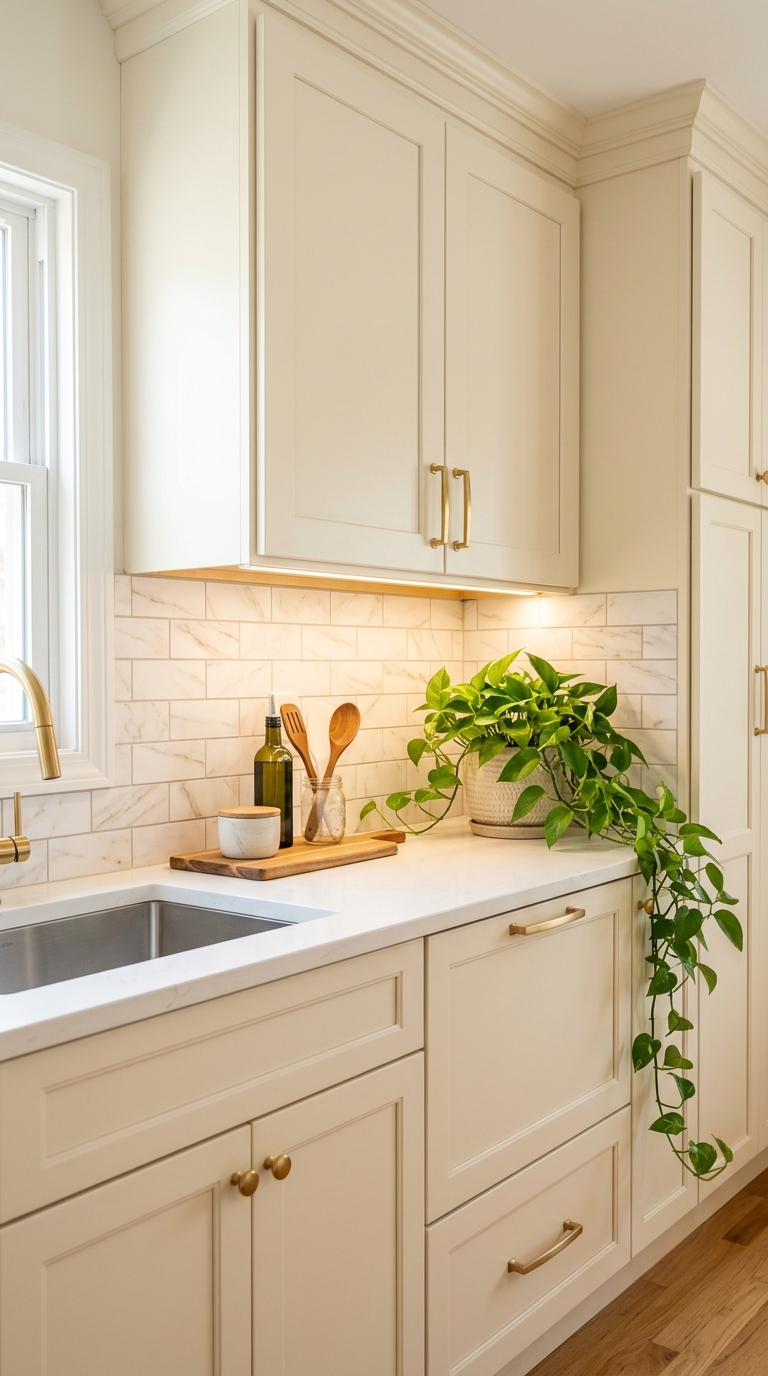
The shift was extraordinary. What had been a dated, flat kitchen became a fresh, contemporary space with a professional finish. The total cost was fifty-five dollars. The peel-and-stick panels can be removed without damaging the surface beneath, which makes this transformation equally suitable for renters who need to restore the original condition before moving out.
The Home Office: Thrifted Desk and a Can of Paint for $110
A home office that functions poorly is a home office that costs you in focus, creativity, and wellbeing every single day. The office in this transformation was a corner of the bedroom occupied by a cheap flat-pack desk, a mismatched chair, and a general sense of low-grade chaos. The owner wanted a workspace that felt inspiring — somewhere that made sitting down to work feel like beginning something rather than enduring something.
The flat-pack desk was donated. In its place, a solid secondhand desk with beautiful wooden legs was found at a local thrift store for thirty-five dollars. A single pot of sage green chalk paint (twelve dollars) was used to paint the desk surface and the wall area directly around it — not the entire room, just a soft rectangular zone on the wall that created an implied boundary for the workspace. This technique, known as a painted panel or color block, gives a small desk area enormous visual authority without requiring wallpaper or full-room painting.
The remaining budget went toward a secondhand wooden task lamp (eighteen dollars), two floating shelves from a discount home store (twenty-two dollars), and a collection of small thrifted ceramic vessels used as pen holders and paper clip containers. A cork board, painted the same sage green as the wall panel, was mounted above the desk for notes and inspiration images.
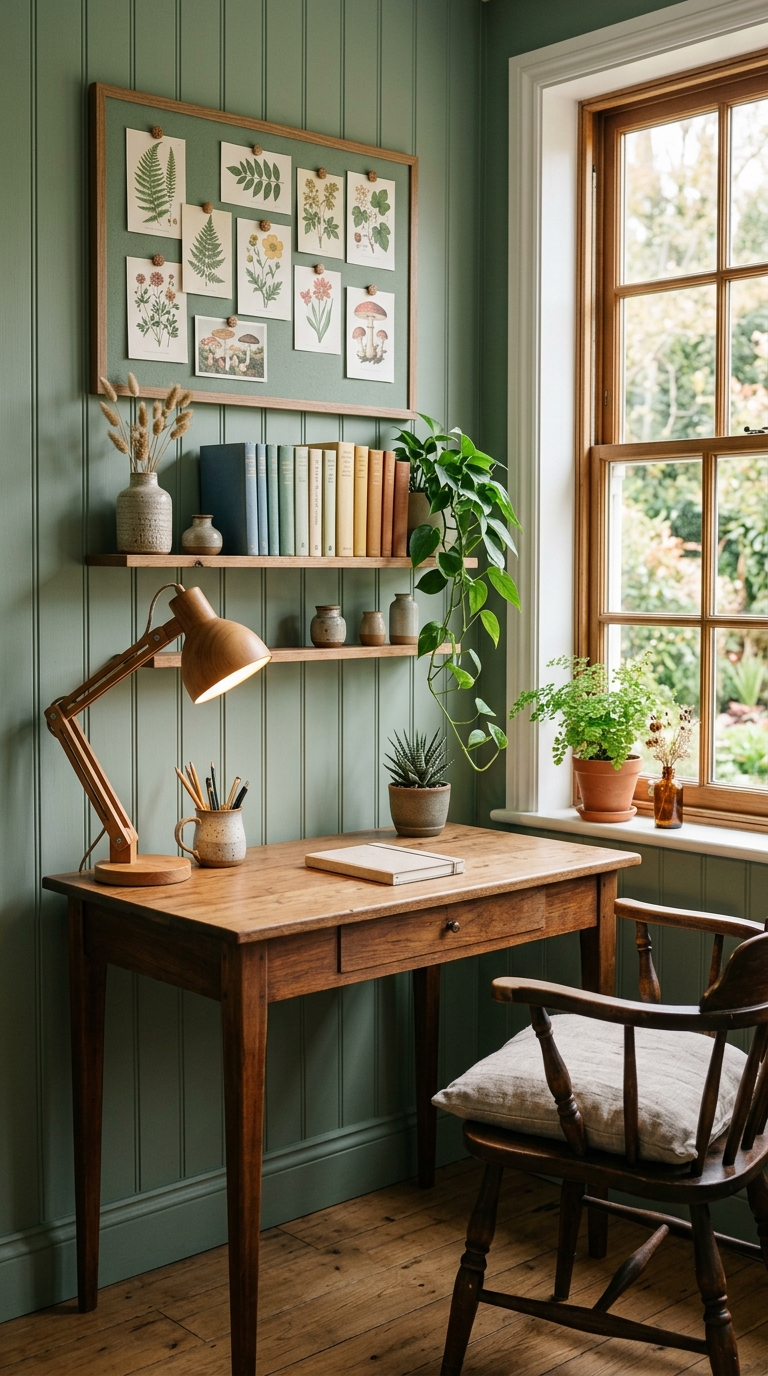
The total: one hundred and ten dollars. The result: a workspace so considered and lovely that the owner reports sitting down to work has become the part of her day she most looks forward to. The physical environment of your work matters enormously, and it turns out you do not need a standing desk or a designer chair to create one that genuinely supports you.
The Bathroom: From Institutional to Spa for $95
Rental bathrooms are often the most cheerless rooms in the home — white tiles, chrome fixtures, a vanity that no one chose and everyone tolerates. But the bathroom is also the room where the smallest interventions carry the greatest weight. You spend intimate, daily time in your bathroom. It deserves to feel good.
This transformation began with a single large eucalyptus branch hung from the shower head using a length of cotton rope — a detail that costs almost nothing and immediately transforms the shower into something that smells extraordinary and looks like a boutique spa. From there: a new shower curtain in a deep, dusty pink linen fabric (twenty-two dollars from a fabric remnant store, with grommets added using a ten dollar grommet kit); a secondhand wooden bath tray found at a charity shop for six dollars and sanded smooth; a collection of matching ceramic soap dispensers and a toothbrush holder sourced from a discount store for fourteen dollars; and a small framed botanical print found at a flea market for eight dollars.
The remaining budget covered a non-slip bath mat in a warm natural cotton weave and a small succulent plant placed on the windowsill. Every object chosen for the bathroom was either natural in material, warm in tone, or both — the consistent palette (cream, dusty pink, warm wood, and green) is what makes the room feel intentional rather than assembled from whatever was available. Total cost: ninety-five dollars. The bathroom now feels like somewhere you want to spend extra time.
The Entryway: Making a Magical First Impression for $75
Entryways are easy to overlook because they are transitional spaces — you pass through them rather than inhabiting them. But the entry is the first impression your home makes, both on guests and on yourself every time you come home. A well-considered entryway can shift your mood from the moment you cross the threshold, and a badly considered one can make your whole home feel smaller and more chaotic than it actually is.
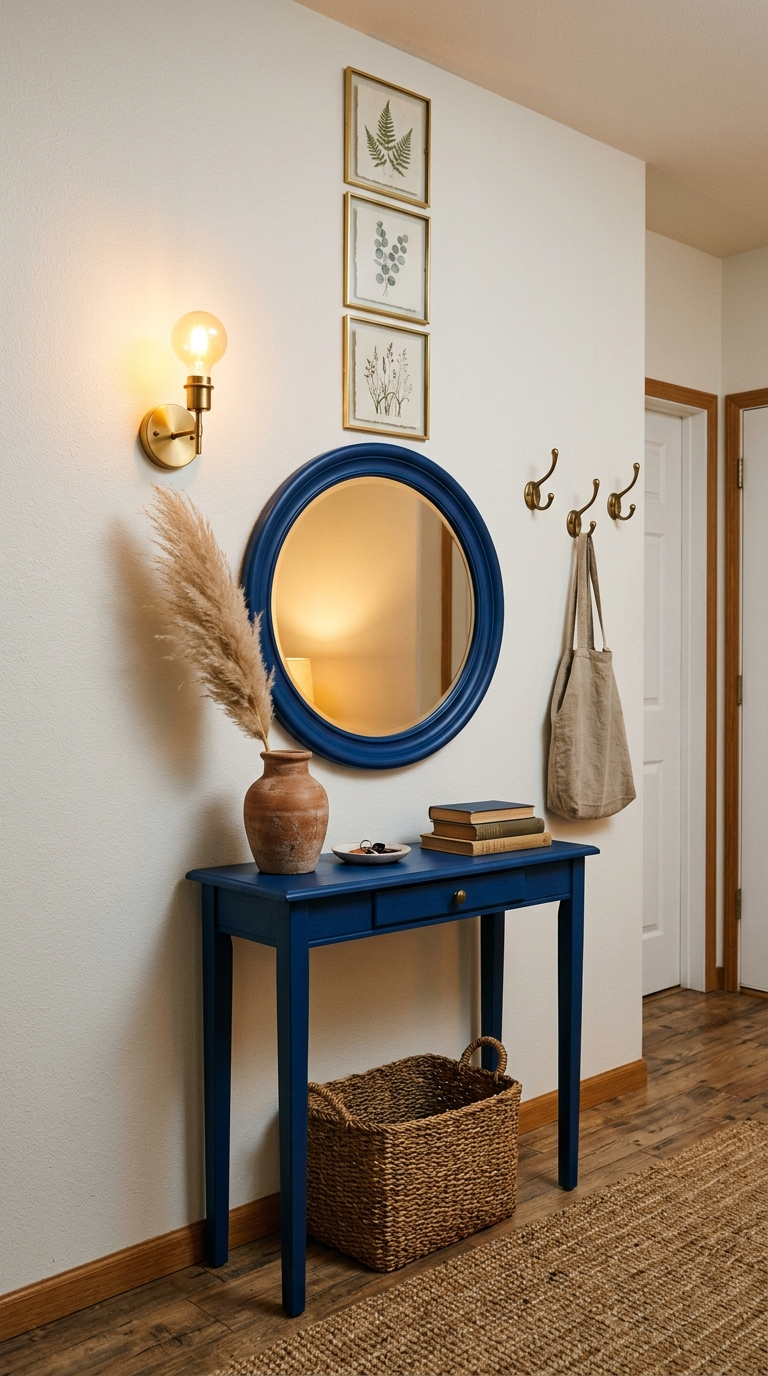
This entryway transformation started with nothing more than a blank wall and seventy-five dollars. A thrifted wooden mirror (twelve dollars, repainted in a deep cobalt blue) was mounted at eye level as the visual anchor. Three vintage brass hooks were installed below it for bags and keys (nine dollars for a set of five). A narrow secondhand console table — actually a repurposed old bookshelf turned on its side and given legs cut from pine dowels — was positioned against the wall and painted the same cobalt blue as the mirror frame. A small woven basket was placed underneath for shoes.
The wall above the mirror received three small framed prints in matching frames (thrifted and repainted gold) creating a mini gallery that draws the eye upward and makes the entryway feel taller. A single large dried pampas grass stem in a terracotta vase on the console table added height, texture, and the kind of effortless, dried-floral elegance that is currently absolutely everywhere and completely timeless at the same time. Total cost: seventy-five dollars. The entry now announces the entire personality of the home in the first three seconds, which is exactly what an entry should do.
The Living Room: A Complete Reset for $180
Back to the beige living room. The approach taken was strategic: identify the three highest-impact interventions possible and invest the entire budget there rather than distributing it thinly across many small purchases that each do a little but nothing transformative.
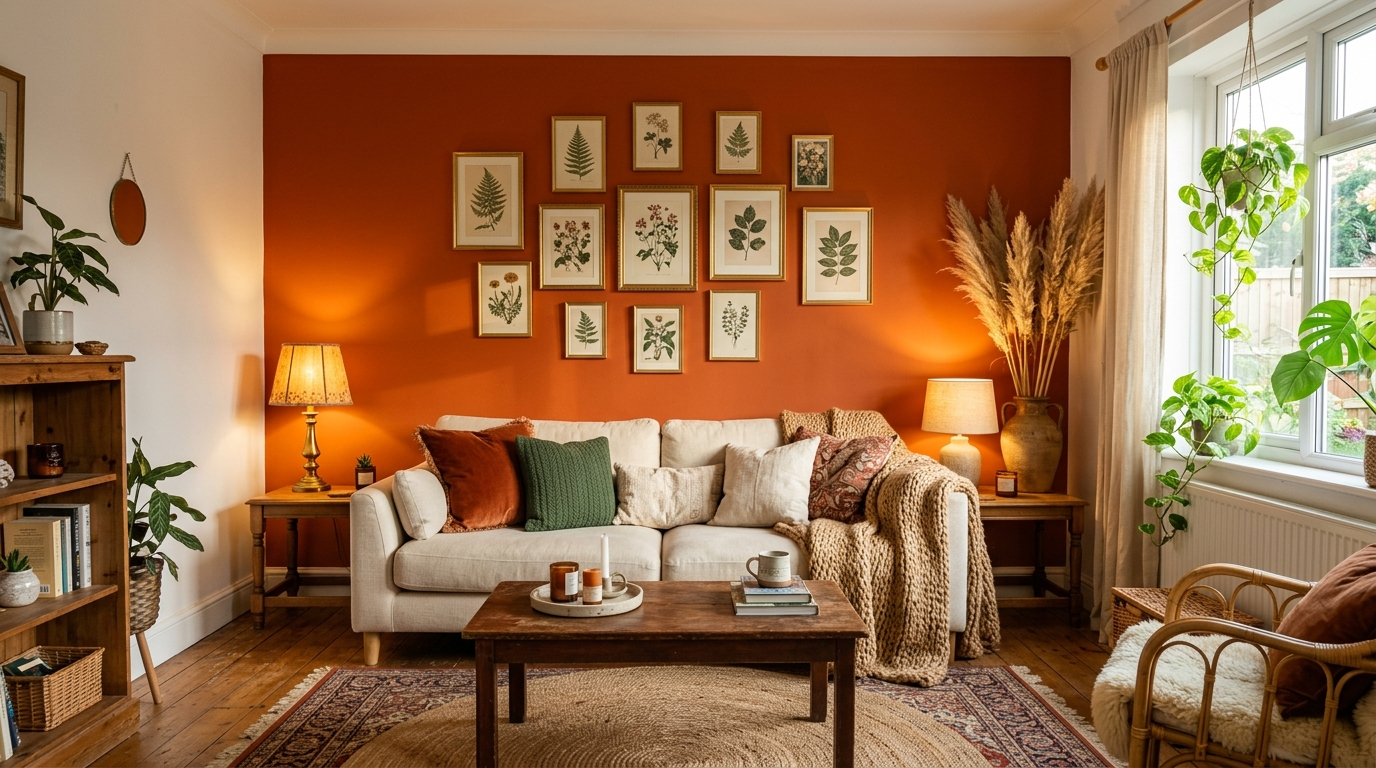
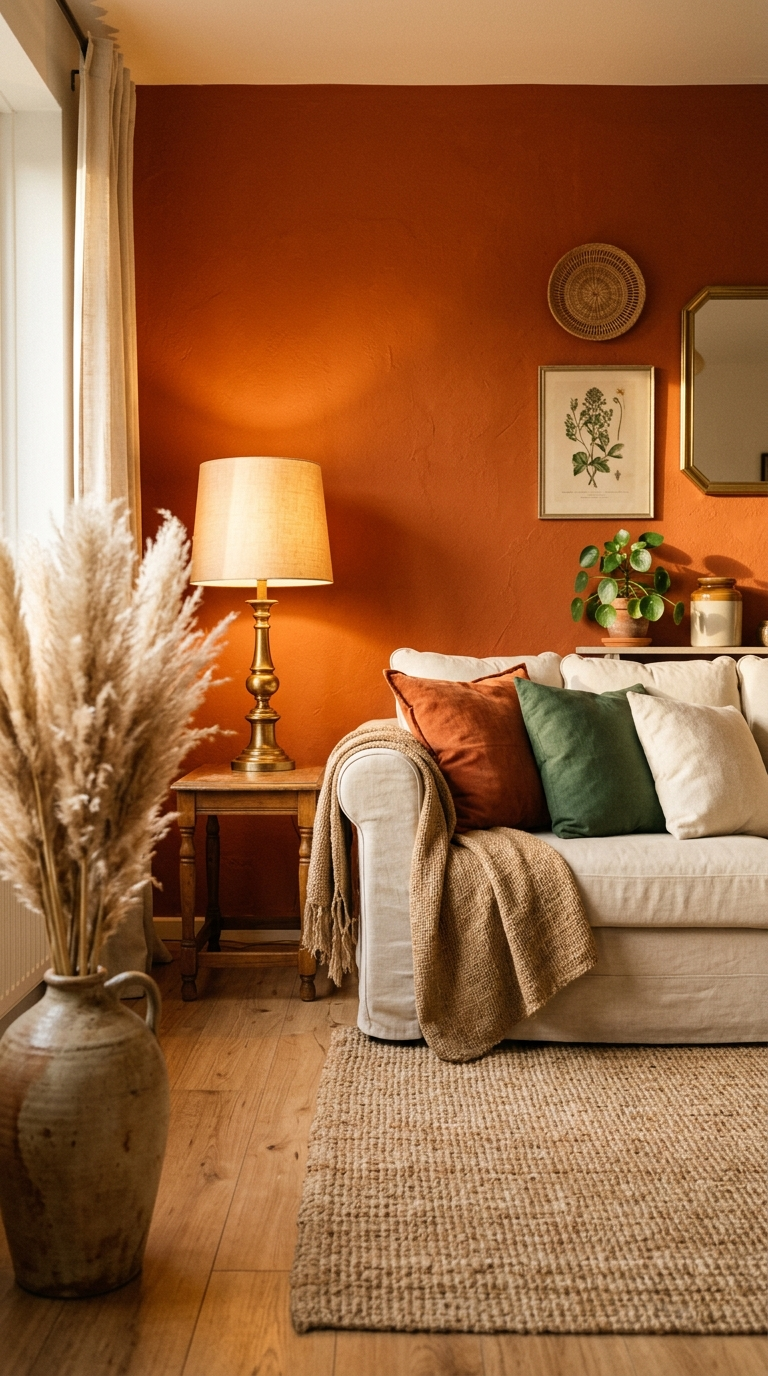
Intervention one: paint. A single wall — the largest, most prominent wall in the room — was painted in a deep terracotta orange. Not the whole room, just that one wall. Cost: thirty-two dollars for a quart of paint and supplies. The effect was seismic. The room went from beige and directionless to warm, anchored, and dramatic in a single afternoon.
Intervention two: textiles. New cushion covers — four of them, in a mix of cream, rust, and forest green — were sourced from a discount online retailer. A large woven throw in natural jute was added to the arm of the sofa. The existing sofa, previously overwhelmed by the beige room, suddenly looked intentional. Cost: fifty-eight dollars.
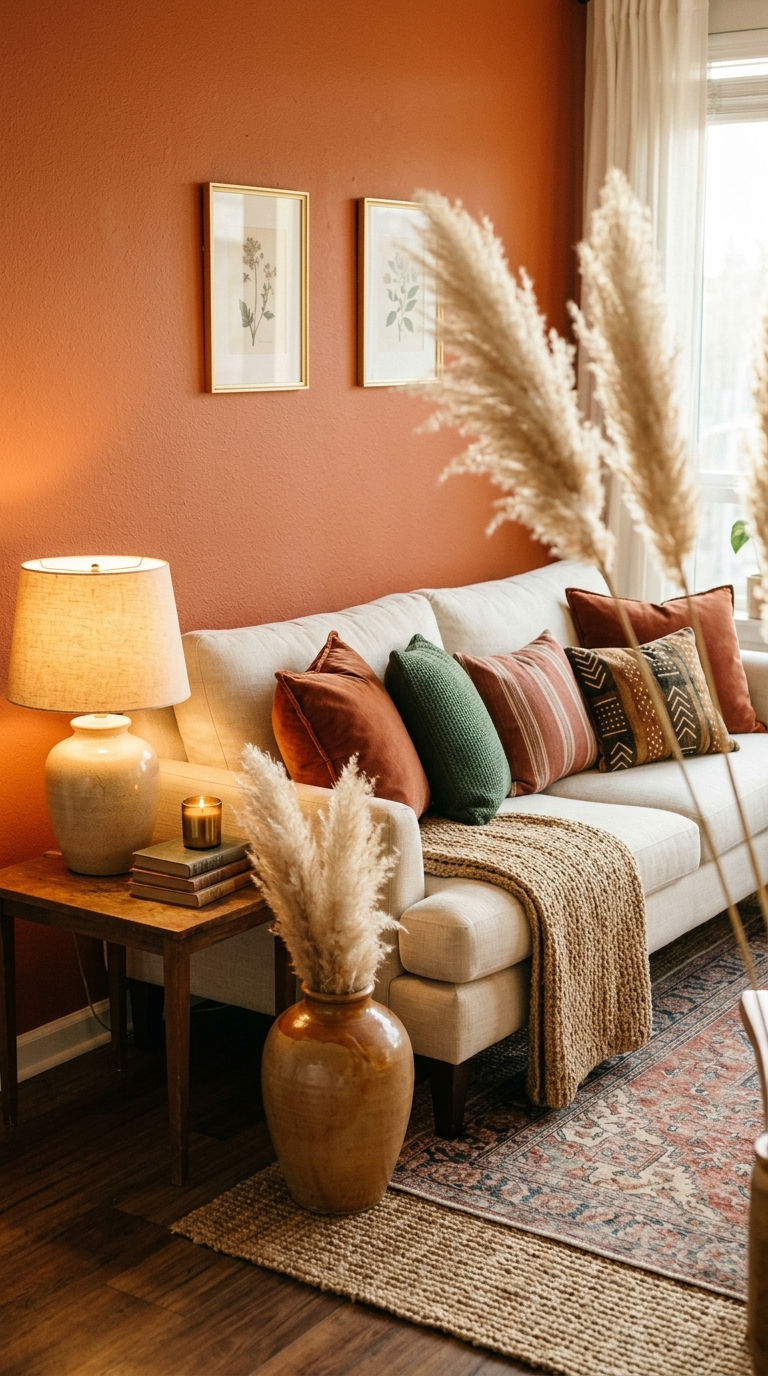
Intervention three: lighting. The overhead light was left untouched. Instead, two secondhand table lamps were thrifted (eight dollars each), given new shades from a discount home store (twenty-two dollars each), and positioned to create pools of warm light at each end of the sofa. The lamps changed the entire quality of light in the room during the evening hours — from flat and institutional to warm and welcoming. Cost: sixty dollars.
Total: one hundred and fifty dollars, leaving fifty dollars for a large secondhand ceramic vase filled with dried grasses placed beside the terracotta wall. The living room was no longer fine. It was the kind of room that people walk into and say, slowly, “Oh, this is really nice.” Which is all you ever really wanted.
The Principle Behind Every Transformation
Every one of these makeovers succeeded because of the same underlying principle: choose fewer things and make each one count. Budget constraints are not obstacles to beautiful design — they are editors. They force you to prioritize, to be decisive, to understand what a room actually needs rather than filling it with objects that merely seem like they might help. The most beautiful, most personal, most truly lived-in homes are not the most expensive ones. They are the most considered ones. And consideration costs nothing at all.