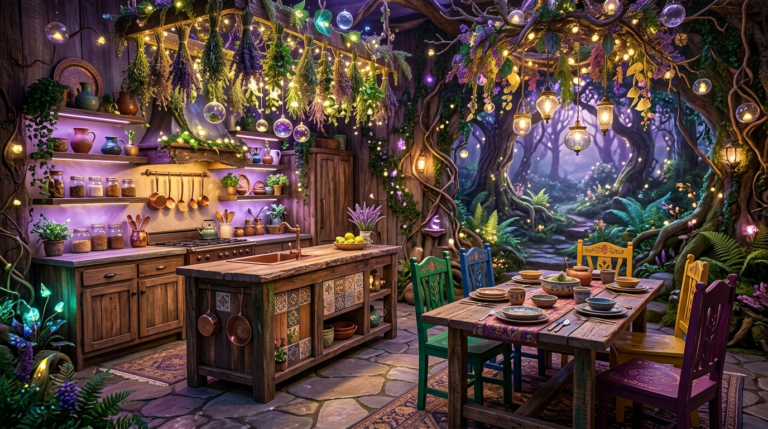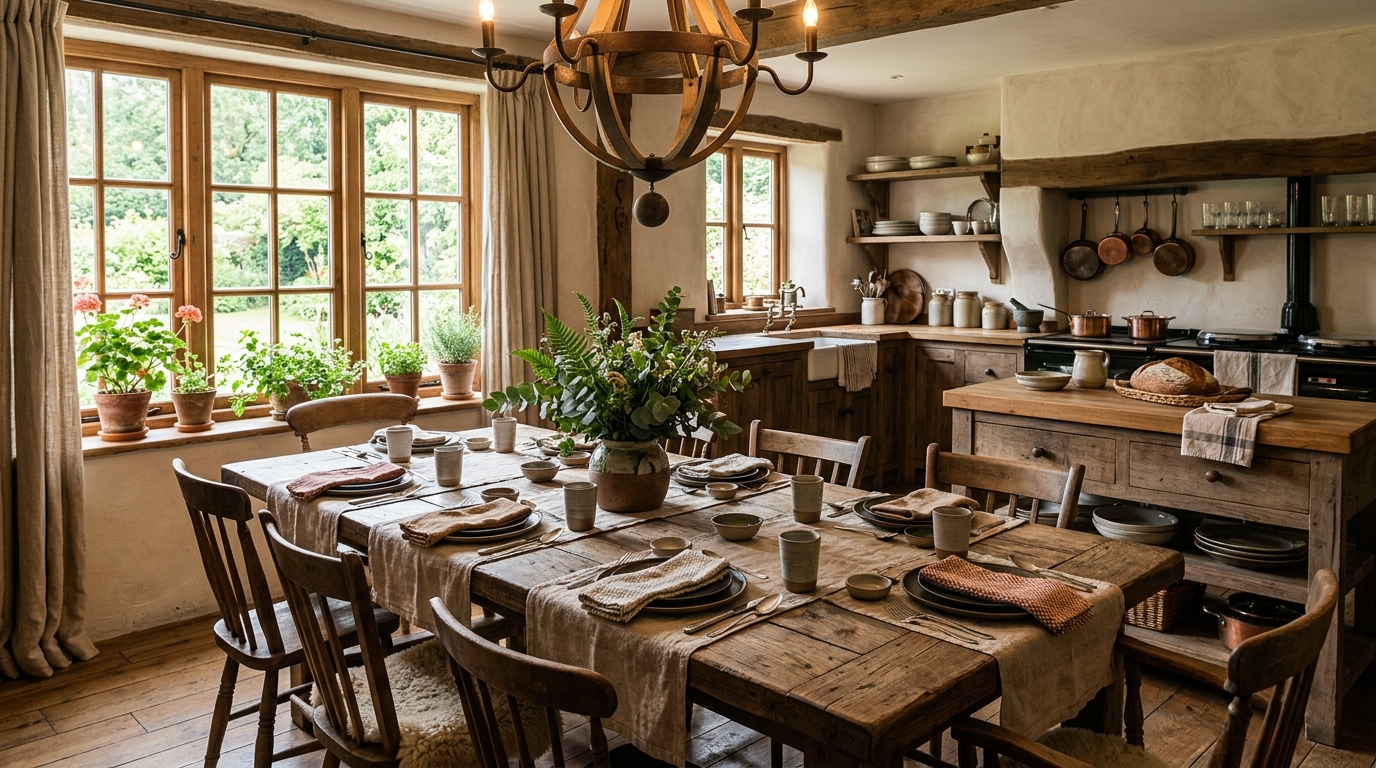
The kitchen and dining areas form the emotional center of any home, where meals are prepared and shared, stories are told, and connections are strengthened. Rustic design brings warmth, character, and a sense of timelessness to these spaces, blending natural materials with functional beauty. This listicle explores twelve carefully selected ideas that work together to create inviting environments perfect for both everyday family life and special occasions. Each concept emphasizes comfort, practicality, and the kind of lived-in elegance that improves with age and use.
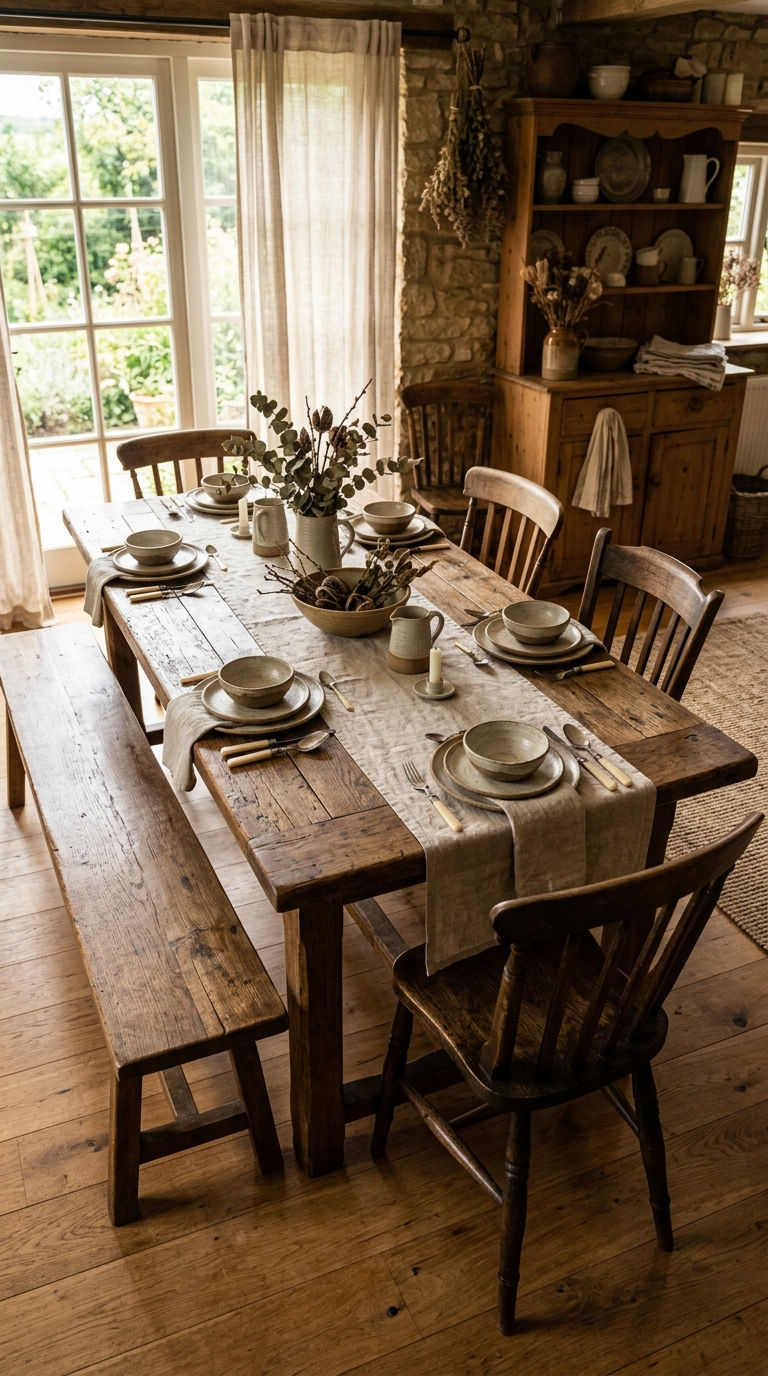
1. Reclaimed Wood Dining Tables as the Heart of the Room
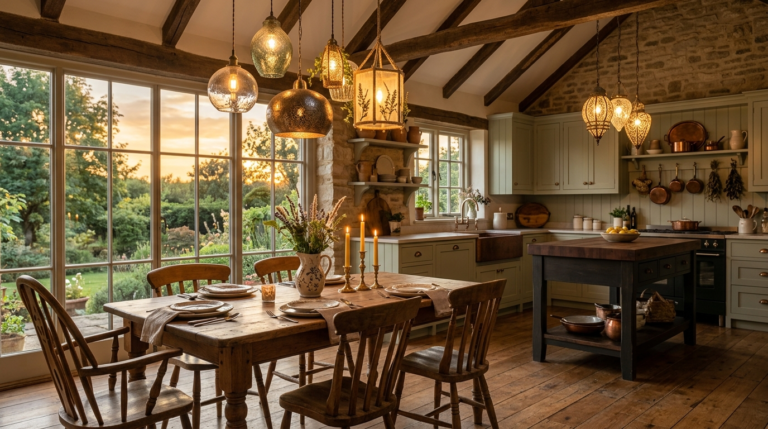
A substantial reclaimed wood dining table serves as the anchor for rustic kitchen and dining spaces. The natural variations in grain, color, and texture tell a story of previous lives while providing a durable surface for daily meals and celebrations. Choose a table with a thick top and sturdy legs in a finish that highlights the wood’s character rather than concealing it. Pair with a mix of seating options—perhaps a bench on one side for flexibility and individual chairs on the other—to accommodate varying group sizes and create visual interest. The table becomes more beautiful with use, developing a patina that reflects family life over the years.
Position the table to allow easy flow between kitchen and dining areas, ideally near a window for natural light during meals. Consider the scale carefully in smaller rooms; an extendable design offers versatility without permanently dominating the space. Protect the surface with coasters and placemats while embracing the occasional mark as part of its evolving character. This foundational piece sets the tone for the entire room and invites people to gather, linger, and connect.
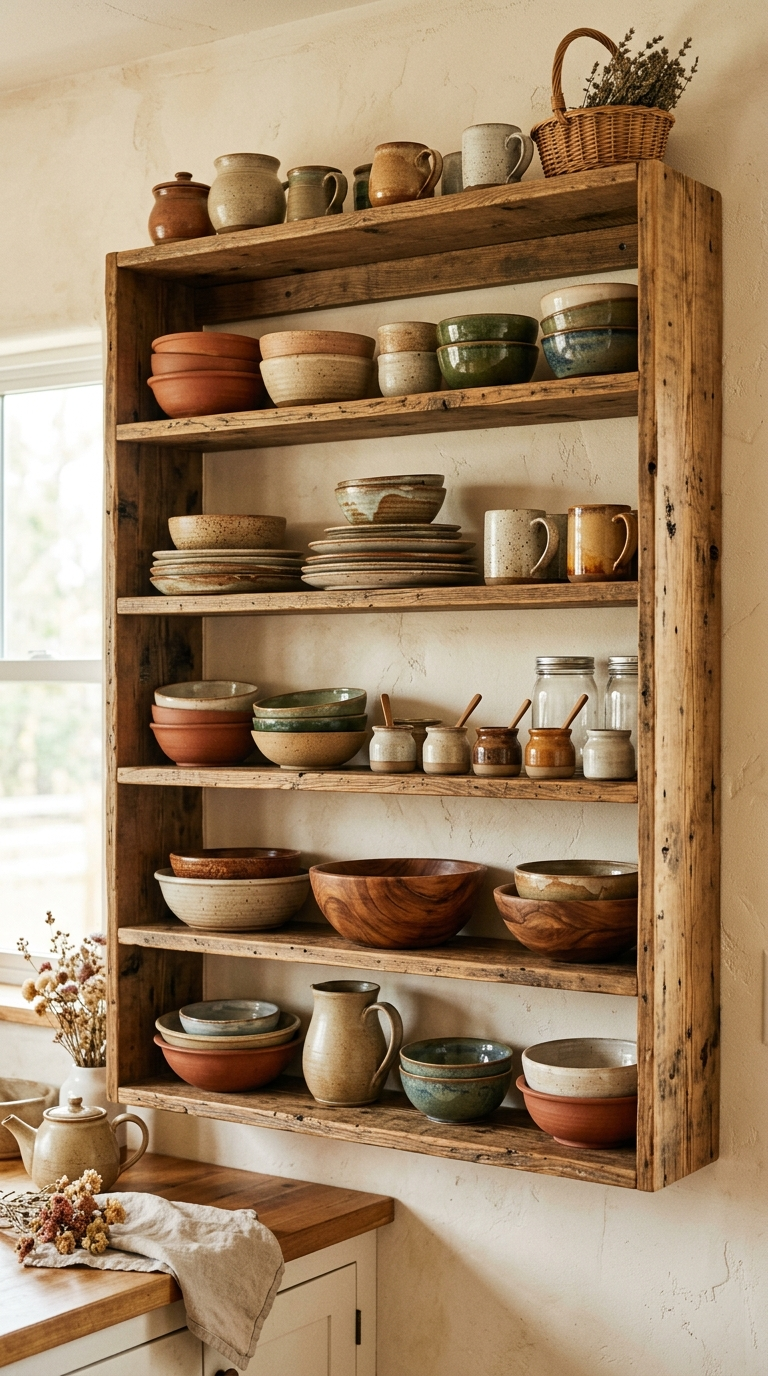
2. Open Shelving Displaying Collected Ceramics and Glassware
Open shelving in a rustic kitchen reveals the beauty of everyday objects while providing practical storage. Display a curated collection of ceramic dishes, wooden bowls, and glassware in warm tones that complement the overall palette. Arrange items with intention—grouping by color or function while leaving breathing room between pieces to avoid a cluttered appearance. The open format encourages regular use of special pieces and makes the kitchen feel more personal and welcoming than closed cabinetry alone.
Install sturdy brackets and thick wooden shelves that can support the weight of dishes and cookware. Leave some shelves partially empty or styled with a few well-chosen decorative objects like a small potted herb or vintage kitchen scale. This approach keeps the space feeling light and airy while showcasing the items you love and use. Regular editing of the display keeps it fresh and prevents visual overload in the heart of the home.
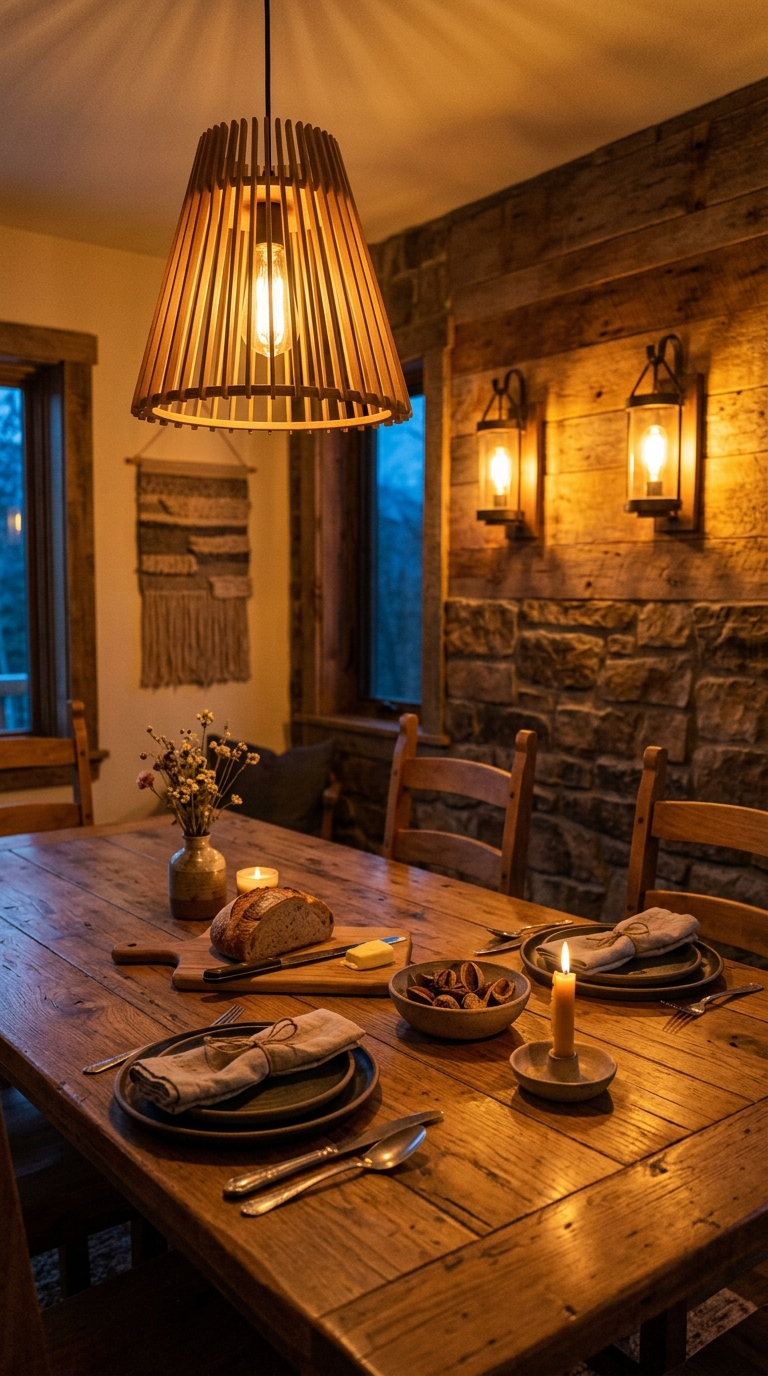
3. Warm Layered Lighting Over the Dining Table
Lighting dramatically influences the mood of kitchen and dining spaces, especially in rustic settings where warmth is paramount. Install a statement pendant or chandelier with multiple bulbs over the dining table, choosing a design with natural materials like wood, metal, or woven elements. Supplement with wall sconces or a floor lamp in the corner for layered illumination that can be adjusted for different activities and times of day. Warm bulbs in the 2700K range create a golden glow that flatters food and faces alike.
Consider dimmers on all fixtures to transition smoothly from bright morning light for breakfast prep to soft evening ambiance for long dinners. Task lighting under upper cabinets or above the sink ensures the workspace remains functional without competing with the ambient warmth. The right lighting turns ordinary meals into special occasions and makes the space feel cozy and enveloping even on dark winter evenings.
4. Natural Textiles and Layered Table Settings
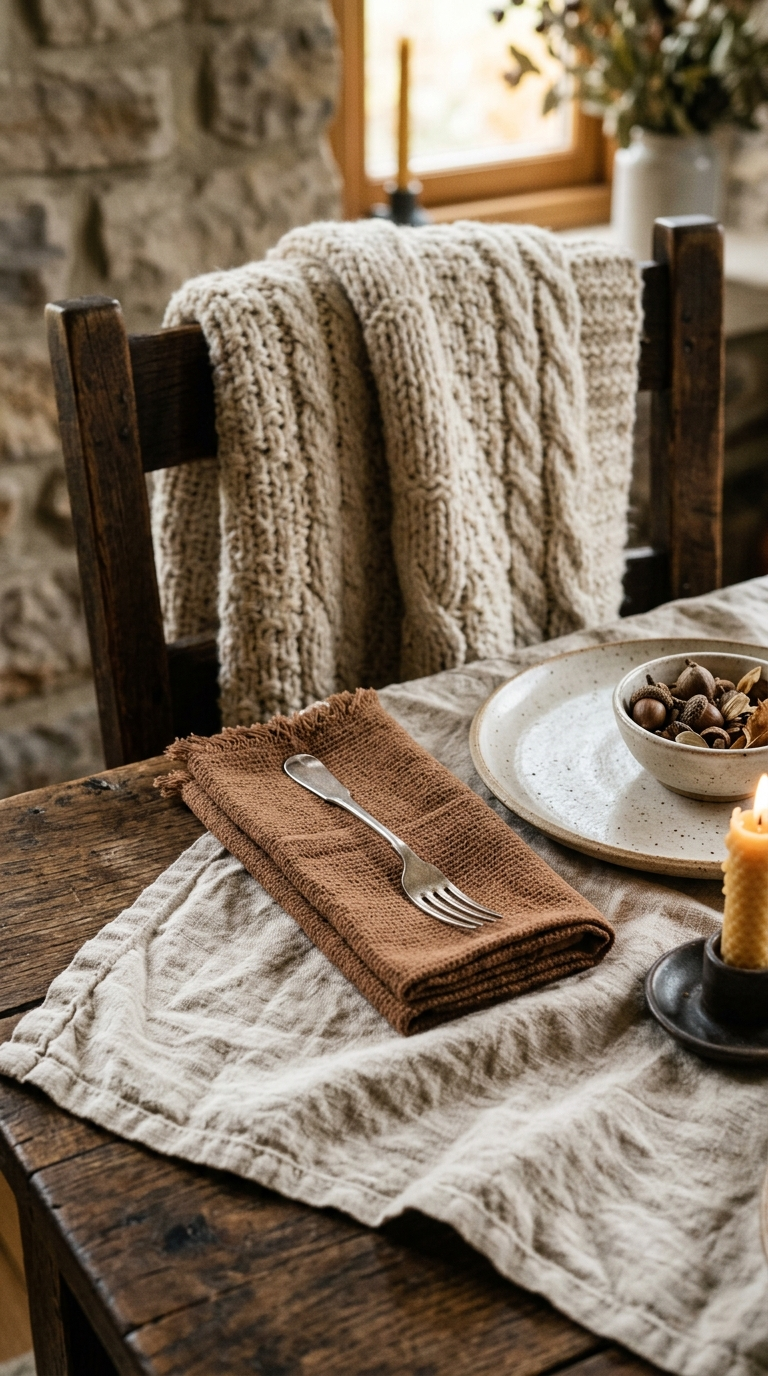
Textiles bring softness and seasonal adaptability to rustic dining areas. Use linen or cotton tablecloths in neutral tones as a base, then layer with runners, placemats, and napkins in complementary textures and subtle patterns. A chunky knit throw draped over a dining chair adds immediate coziness and can be used for extra warmth during cooler months. These layers create visual depth and make the table feel welcoming and thoughtfully prepared for each meal.
Choose fabrics that are easy to care for and improve with age, developing a soft hand and beautiful wrinkles that enhance the rustic aesthetic. Rotate textiles seasonally—lighter colors and fabrics in spring and summer, richer tones and heavier weaves in autumn and winter. The tactile quality of natural textiles invites people to touch and linger, contributing to the overall sense of comfort that defines successful rustic spaces.
5. Thoughtful Centerpieces Using Seasonal Greenery and Natural Elements
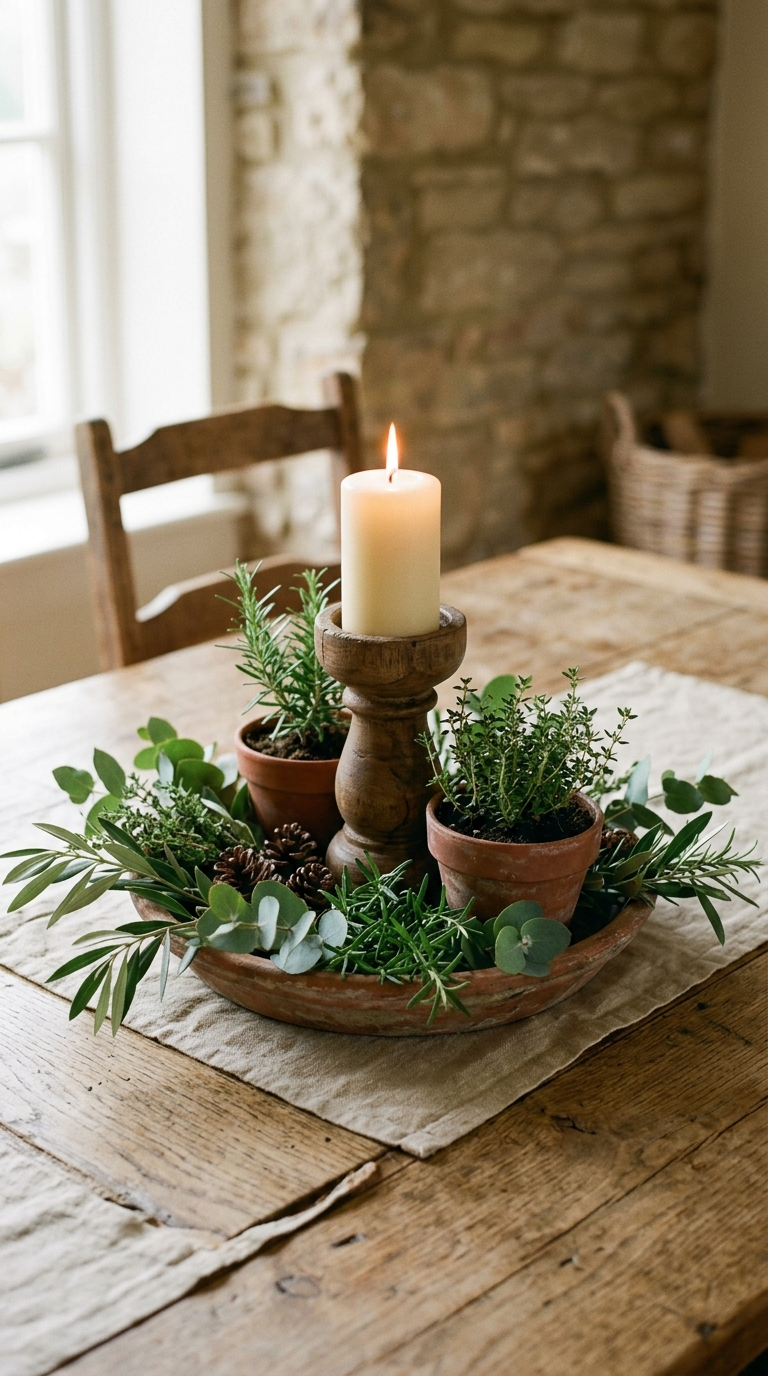
Centerpieces in rustic dining spaces should feel collected rather than contrived. Create simple arrangements using seasonal branches, fresh herbs in small pots, or a low bowl filled with pinecones, acorns, or smooth stones gathered from nature walks. These organic displays change with the seasons and bring the outdoors in without overwhelming the table or interfering with conversation and serving. A single large candle in a simple holder or a cluster of smaller ones adds gentle light and warmth.
Keep arrangements low enough for easy eye contact across the table. Incorporate elements from your own garden or local farmers market when possible to support a connection to place and season. The beauty of these natural centerpieces lies in their imperfection and transience—they can be refreshed weekly or with each season, keeping the dining experience dynamic and alive throughout the year.
6-12. Additional Ideas: Kitchen Island Styling, Herb Gardens, Warm Color Palettes, Vintage Accents, Functional Storage, and Cozy Breakfast Nooks
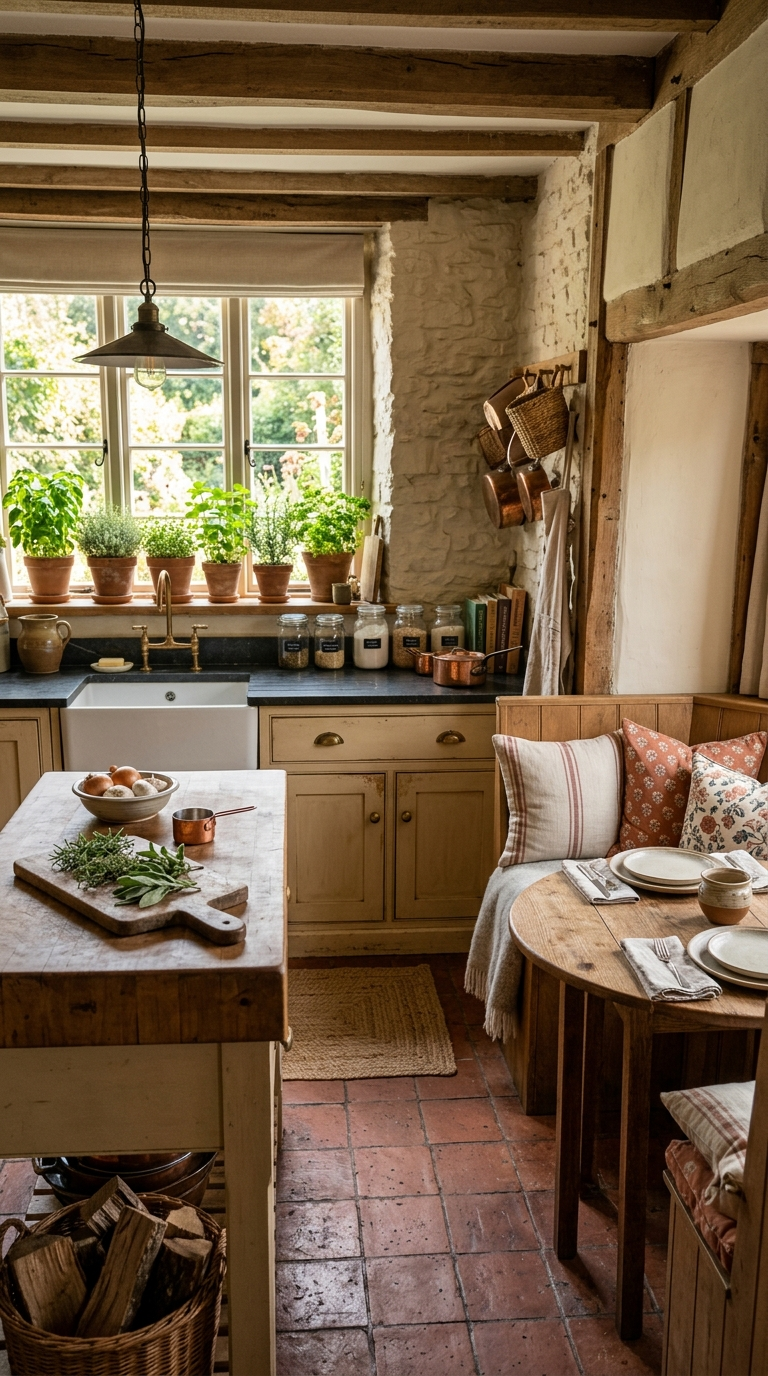
Beyond the foundational elements, consider a kitchen island or peninsula with a butcher block or stone top that invites casual gathering and food preparation together. A small indoor herb garden on a sunny windowsill or dedicated shelf provides fresh flavors and living greenery year-round. Embrace a warm color palette of terracotta, soft greens, creams, and wood tones that feel grounding and inviting. Incorporate vintage or antique pieces like a weathered cabinet or old scale for character and history. Prioritize functional storage solutions such as open baskets, labeled jars, and pull-out organizers that keep the space tidy while maintaining accessibility. Finally, carve out a cozy breakfast nook with a built-in bench and small table near a window for morning light and intimate family moments. Together these ideas create a cohesive rustic kitchen and dining environment that supports both daily life and memorable gatherings, growing more beautiful and meaningful with each passing season and shared meal.