16 Stunning Entryway Ideas That Make an Incredible First Impression
Your entryway is the very first thing guests see when they walk through your door — and the last thing you see before you head out into the world. Yet for many homeowners, this hardworking space is overlooked, underfurnished, and underestimated. Whether you have a grand foyer with soaring ceilings or a narrow hallway barely wide enough for two people to pass, there is enormous potential hiding in this transitional zone. With the right combination of furniture, lighting, storage, and styling, your entryway can set the tone for your entire home — welcoming guests with warmth and giving your household the functional systems it needs to stay organized.
In this post, we’re exploring 16 of the most inspiring, practical, and stylish entryway ideas you can implement right now. From console tables layered with personality to smart built-ins that eliminate morning chaos, these ideas span every aesthetic and budget. Read on for all the inspiration you need to fall in love with your entryway all over again.
1. Anchor the Space with a Statement Console Table
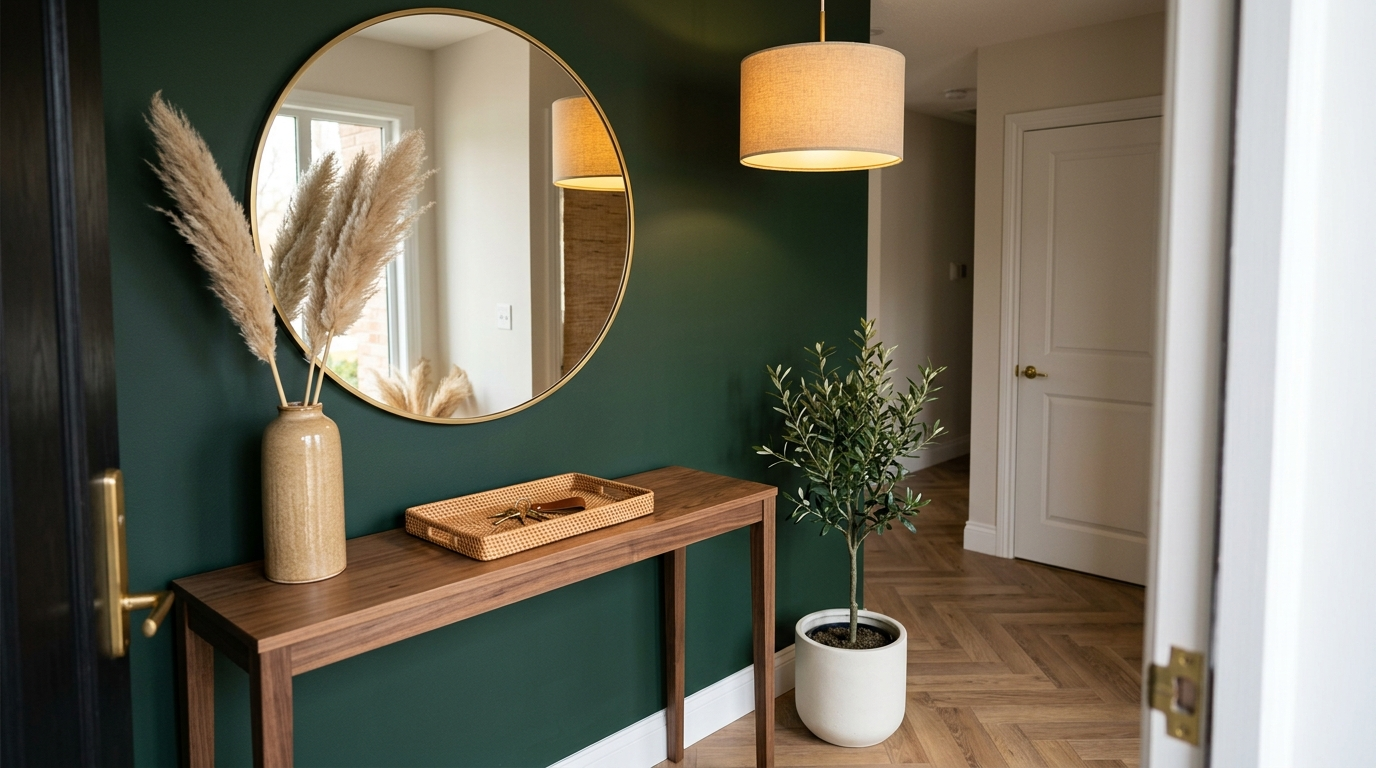
A console table is the backbone of almost every well-designed entryway. It provides a landing spot for keys and mail, a surface for decorative objects, and a visual anchor that immediately signals intentional design. Look for a console that suits your hallway’s proportions — a slim, wall-hugging design in tight spaces, or a deeper, more architectural piece in a generous foyer. Natural wood tones bring warmth, while painted finishes or metal legs inject a more modern sensibility. Layer the top with a mix of heights: a tall table lamp on one end, a small tray or bowl for keys, a stack of beautiful books, and a single sculptural object or vase with fresh greenery. Keep the styling restrained — editing is everything in a small space.
2. Install a Built-In Mudroom Bench with Cubbies
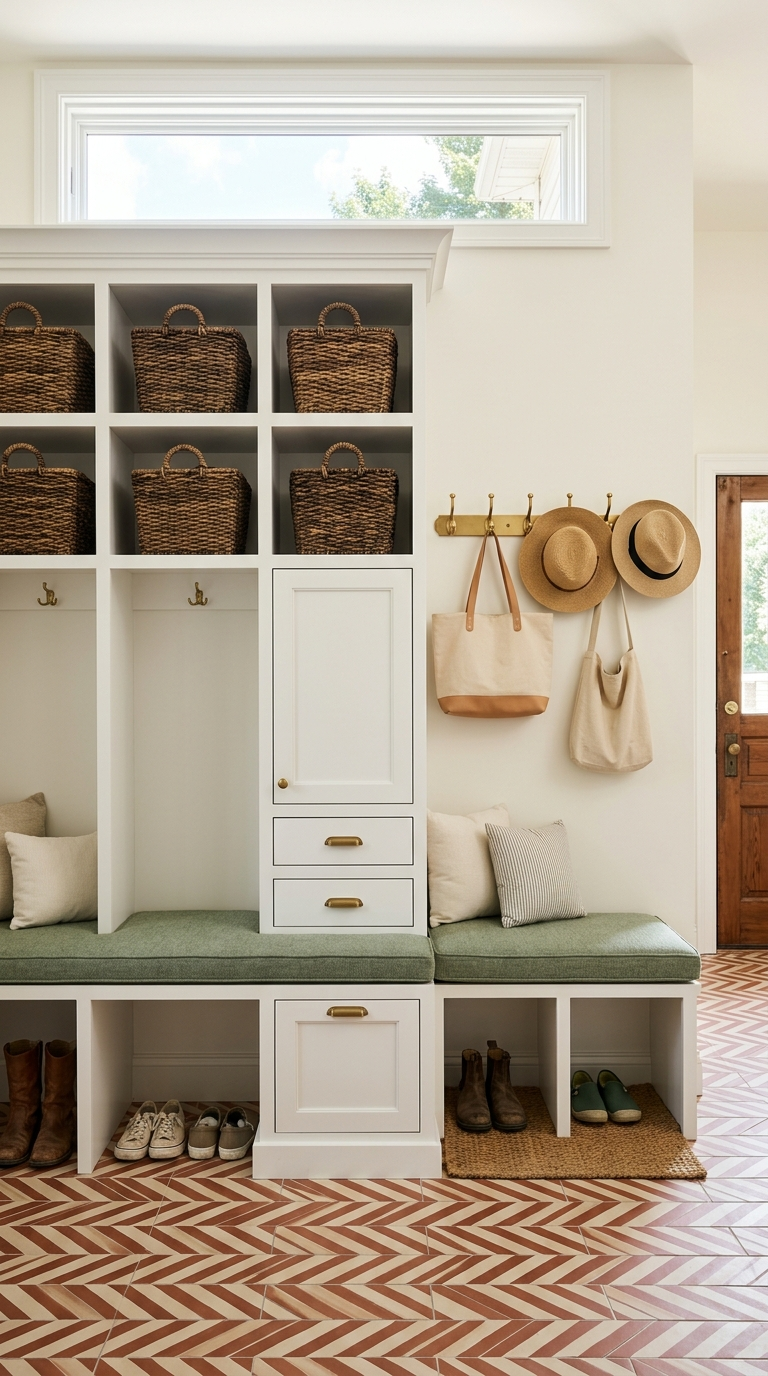
If your entryway connects directly to the outdoors — a front door hall, side entrance, or garage corridor — a built-in mudroom bench is one of the most transformative investments you can make. Custom built-ins with bench seating, individual cubbies above, and lower shoe storage below create a fully functional drop zone that keeps the chaos of daily life contained. Opt for painted MDF cabinetry in a crisp white or muted sage for a timeless look, or go for open oak shelving and wicker baskets for a more relaxed, organic feel. Add hooks at varying heights so adults, children, and even dogs have a designated spot for bags, coats, and leashes. A cushioned bench seat upholstered in a durable, washable fabric completes the setup beautifully.
3. Use a Large Mirror to Amplify Light and Space
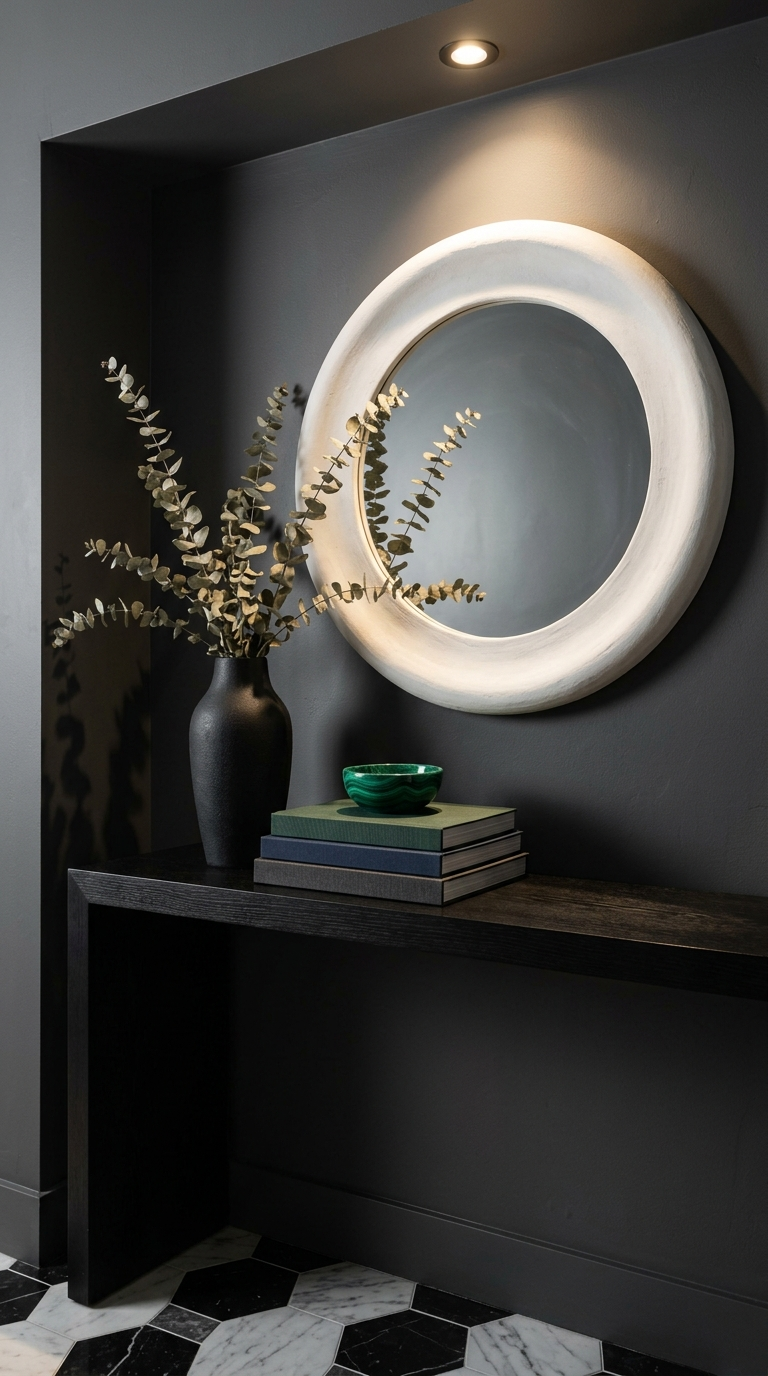
One of the oldest tricks in the design playbook — and one that never loses its effectiveness — is hanging a large mirror in your entryway. Mirrors bounce natural light deeper into what is often the darkest part of a home, instantly making narrow hallways feel wider and low-ceilinged entries feel taller. A full-length floor mirror leaned casually against the wall adds an effortlessly chic, editorial quality. A round mirror with a sculptural frame introduces softness and a touch of drama. For maximum impact, position the mirror opposite a window or directly across from a light source so it doubles the luminosity in the space. Antique gold, brushed brass, and blackened steel frames all look stunning in entryways because they add a jewel-like quality without competing with other furnishings.
4. Create a Gallery Wall That Tells Your Story
Your hallway walls are prime real estate, and a thoughtfully curated gallery wall is one of the most personal and powerful ways to fill them. Rather than a random collection of frames, approach this like an interior designer would: choose a cohesive color palette or frame finish, mix different frame sizes and orientations, and vary your content between family photographs, original artwork, vintage prints, and typographic pieces. A tight grid of matching frames reads as structured and contemporary, while an organic salon-style arrangement feels layered and lived-in. Pro tip: lay your gallery arrangement out on the floor before committing to nails in the wall, or use painter’s tape to mock up the positions. This saves significant time and frustration, and lets you refine the composition until it feels just right.
5. Layer Lighting for Ambience and Function
Lighting in an entryway should do two jobs simultaneously: it should illuminate the space practically — so you can find your keys, check your reflection, and navigate safely — and it should create an ambience that makes arriving home feel like a warm embrace. A flush-mount or semi-flush ceiling fixture provides the essential overhead light, while a table lamp on your console table adds a softer, more intimate glow at eye level. If your entryway is particularly long or narrow, consider wall sconces placed at intervals along the corridor for a hotel-inspired look that is both dramatic and deeply flattering. Smart bulbs with dimmer capability allow you to transition your entryway from bright and practical in the morning rush to warm and welcoming in the evening.
6. Introduce a Striking Pendant or Chandelier
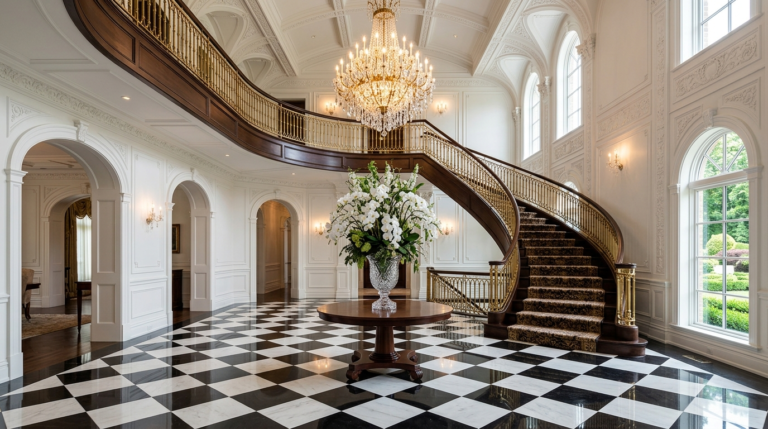
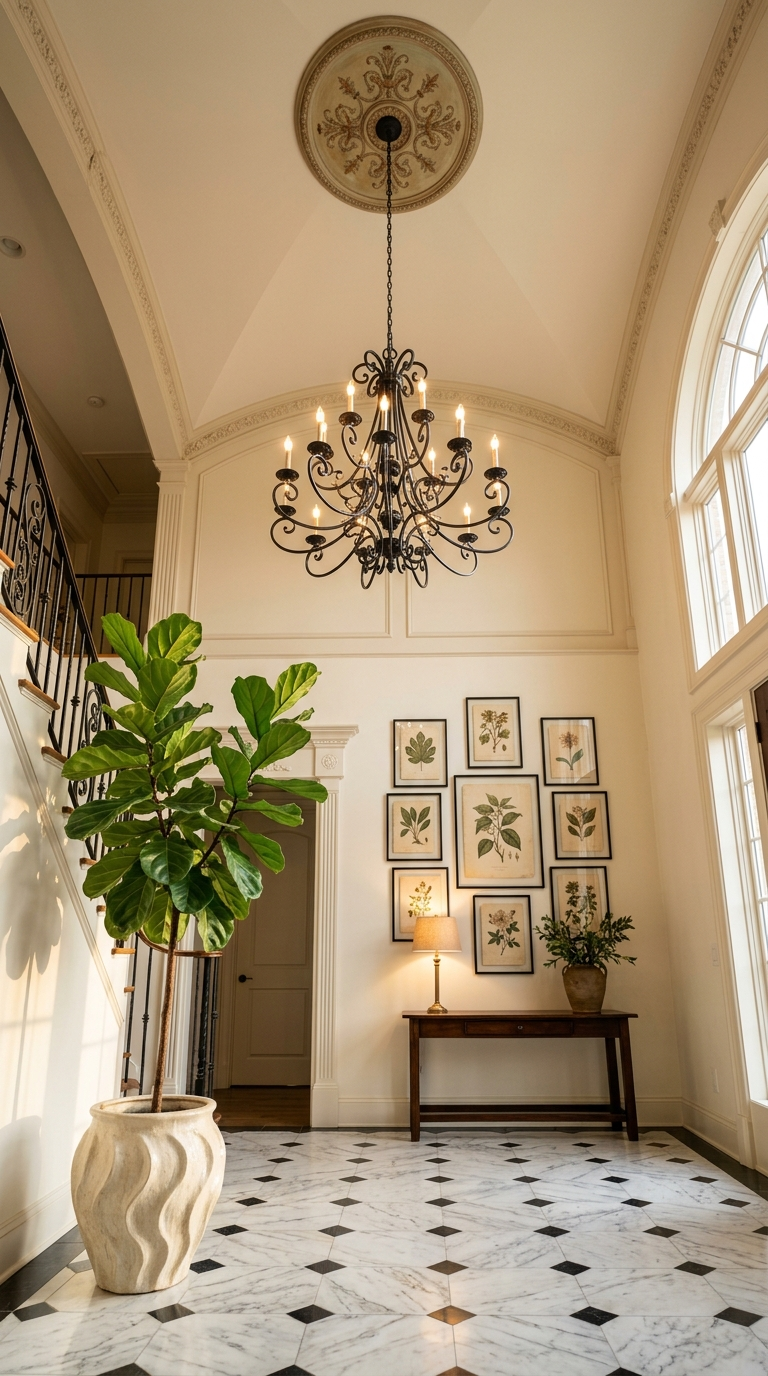
If your entryway has any height to it at all, a statement pendant or chandelier is a non-negotiable upgrade. This single design move can elevate a basic hallway into something that genuinely surprises and delights. In a tall foyer, a dramatic multi-arm chandelier with metallic or artisan glass shades commands attention and establishes a sense of grandeur. In a more modest space, a single globe pendant in an unexpected material — rattan, hand-blown glass, hammered brass — brings texture and personality without overwhelming the room. The key is scale: always size your pendant relative to the room. A general rule of thumb is to add the room’s length and width in feet, then convert to inches — that number gives you a good approximate diameter for the fixture.
7. Bring Nature Indoors with a Dramatic Plant Moment
A single well-chosen plant can transform the energy of an entryway entirely. In a tall space, a sculptural fig tree, a potted olive, or a trailing pothos in a beautiful ceramic vessel creates an immediate sense of life and vitality. In narrower hallways, wall-mounted planters or a slim plant stand with cascading leaves adds organic texture without consuming precious floor space. Choose plants that can tolerate lower light conditions since entryways often don’t receive direct sunlight — cast iron plants, ZZ plants, snake plants, and peace lilies are all excellent performers. Pair your greenery with a beautiful hand-thrown pot in earthenware, speckled stoneware, or matte black for a designer look that photographs beautifully and ages gracefully.
8. Define the Space with a Bold Entryway Rug
The floor is one of the most impactful canvases you have in your entryway, and a well-chosen rug can define the entire aesthetic of the space. In a foyer, a round rug beneath a central light fixture creates symmetry and formality. In a hallway, a long runner with a bold geometric pattern or rich botanical motif draws the eye forward, creating the illusion of length and guiding guests naturally towards the heart of your home. Consider the practical realities too: your entryway rug will take significant abuse from foot traffic, shoes, and weather. Natural fibers like jute and sisal are incredibly durable and bring wonderful texture, while flat-weave rugs in wool or cotton are easy to clean and hold their color beautifully. Avoid thick pile rugs near front doors, as they can obstruct the door’s swing.
9. Add a Dedicated Key and Mail Station
One of the most frequent pain points in any household is the chaos of misplaced keys, piling mail, and forgotten phone chargers. Solving this problem at the point of entry — rather than after it has spread through the rest of the house — is a small systems intervention with enormous daily rewards. A wall-mounted key cabinet with hooks inside and a small shelf on top handles all of this beautifully. Alternatively, a simple set of brass or matte black hooks paired with a shallow wall-mounted tray achieves the same result with a more minimal aesthetic. Designate a specific spot for mail that comes in — a lidded box, a wall pocket, or a tray with dividers for incoming and outgoing — so paper clutter never gets a chance to accumulate on your console table.
10. Make a Statement with Wallpaper
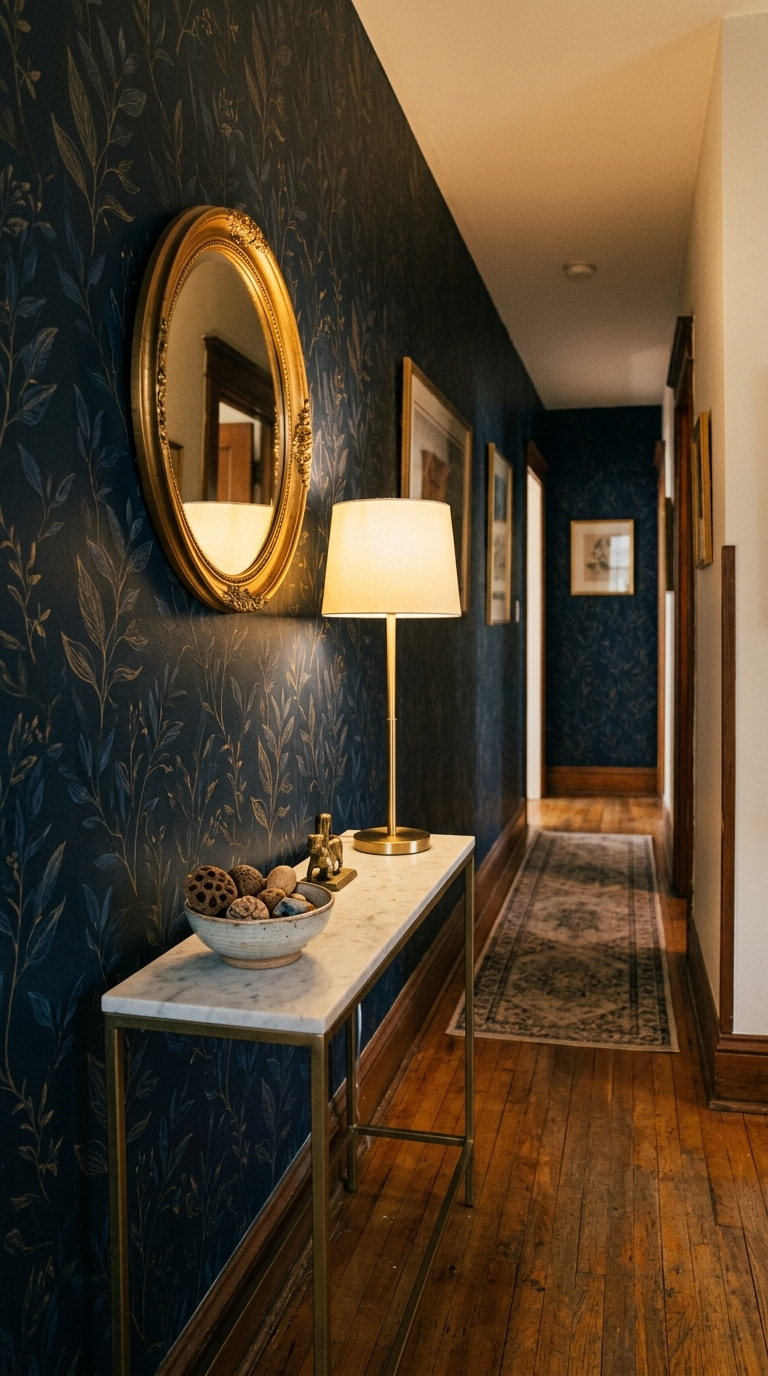
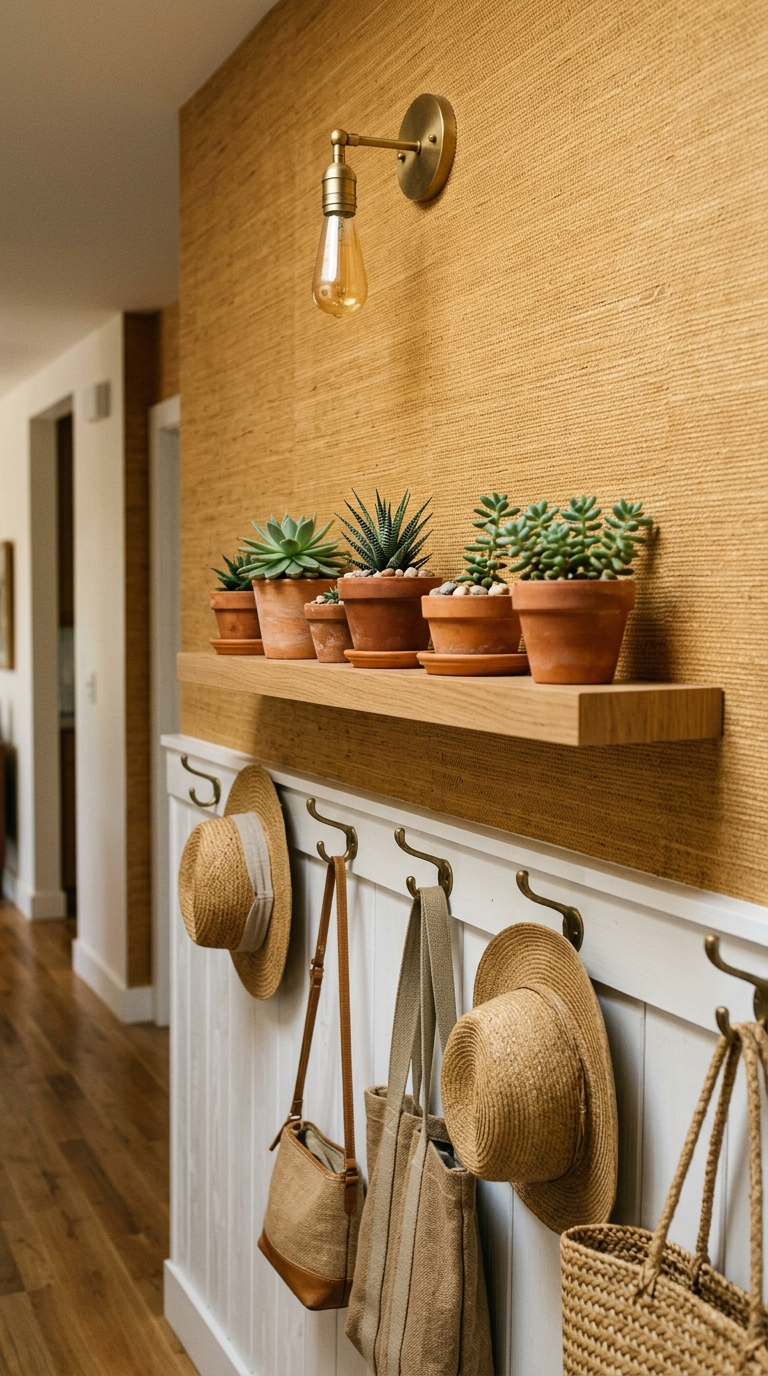
Hallways and entryways are one of the very best places in the home to be bold with wallpaper. Because the space is transitional — you pass through it rather than spending extended time within it — you can afford to use patterns and colors that might feel overwhelming in a living room or bedroom. A rich botanical print in deep jewel tones creates an enveloping, maximalist feeling that is endlessly sophisticated. Geometric patterns in black and white or navy and gold bring graphic energy and punch. Textured grasscloth wallpapers add depth, warmth, and organic character without committing to a busy pattern. Even a single accent wall at the end of a hallway — what designers call a “termination wall” — can create a stunning focal point that makes the entire corridor feel intentional and complete.
11. Invest in Smart Shoe Storage
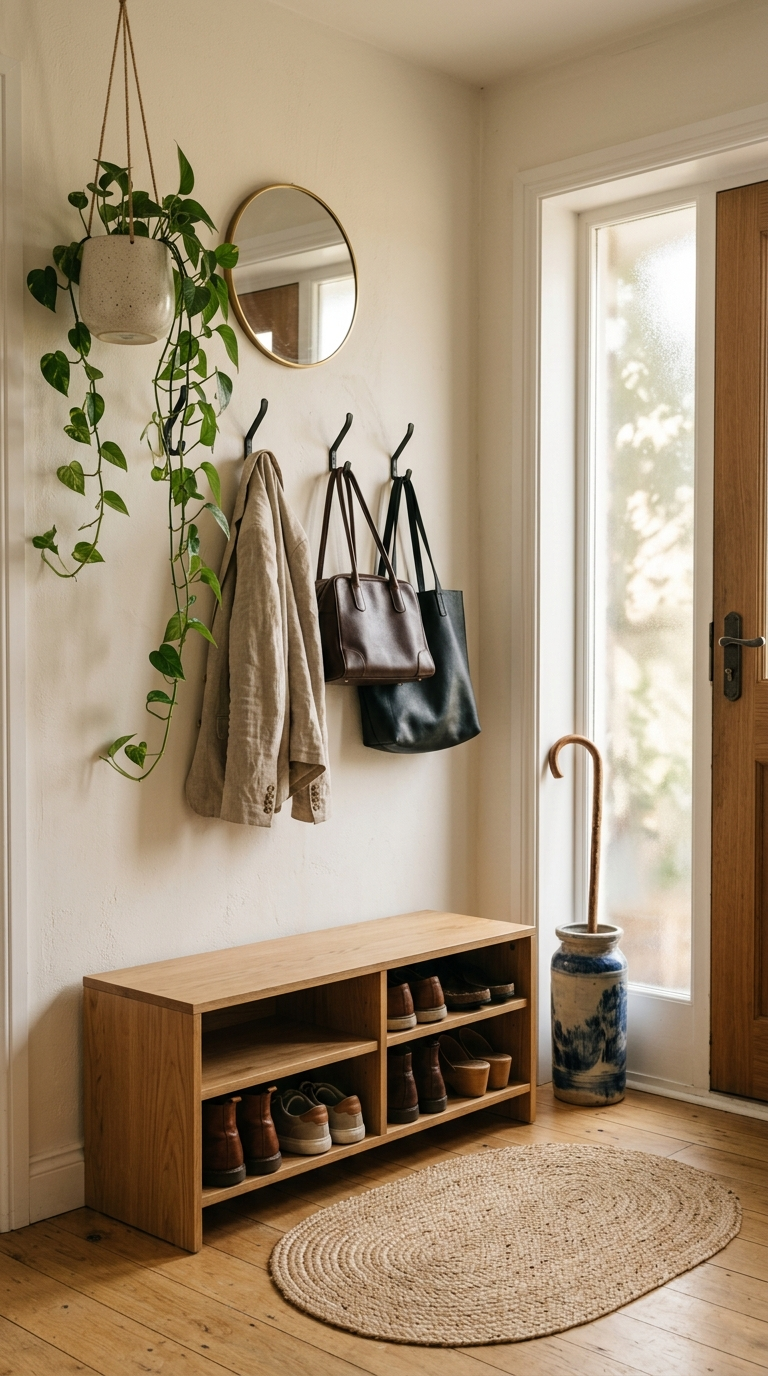
Shoes are the number one source of entryway clutter in most homes, and getting serious about shoe storage is one of the highest-return organizational investments you can make. A slim shoe bench with hidden storage below provides seating for putting shoes on while concealing the shoes themselves inside. Open slanted shelving in a geometric metal frame has an industrial-chic look and keeps shoes visible and accessible. For a more concealed approach, a console-height cabinet with solid or slatted doors keeps everything out of sight while maintaining a clean, furniture-like appearance. In households with children, lower hooks and accessible bins at child height empower kids to take ownership of their own belongings — a small design decision that pays off enormously in daily life.
12. Use Paint to Create Architectural Interest
Paint is the most budget-friendly tool in any decorator’s arsenal, and in an entryway, it can work remarkable magic. A deeply saturated wall color — forest green, inky navy, terracotta, or charcoal — transforms a plain hallway into a cinematic passageway that sets a powerful mood from the moment guests arrive. Two-tone paint treatments, where the lower third of the wall is painted in a contrasting shade separated by a painted chair rail or simple trim detail, add architectural character to a perfectly flat wall. For a more subtle but equally beautiful effect, painting the ceiling a shade darker or lighter than the walls — an approach often called the “fifth wall” technique — draws the eye upward and creates an enveloping, cocooning quality that is deeply satisfying.
13. Curate a Beautiful Scent Experience
The entryway is not just a visual experience — it is a multisensory one. The scent that greets guests as they cross your threshold is one of the most powerful and underestimated design tools available to you. A beautifully displayed candle in an elegant vessel, a reed diffuser in a complementary fragrance, or a pot of fresh herbs growing in a small planter by the door all contribute to an olfactory welcome that lingers in the memory long after the visit ends. Choose a signature scent for your entryway — something clean and inviting, like linen, eucalyptus, or white tea — and display the vessel itself as a decorative object. A beautiful candle in a hand-thrown ceramic or a diffuser in a sculptural glass bottle elevates the functional object into something worthy of its prominent position.
14. Design a Functional Command Center
For busy families, the entryway is often the operational hub of daily life — the place where permission slips get signed, sports bags get packed, and schedules get coordinated. Embracing this reality and designing a proper command center in the entry hall eliminates the friction of morning chaos. A wall-mounted magnetic board or corkboard at adult eye height can hold schedules, reminders, and permission forms. A charging station with a power strip concealed inside a decorative box keeps devices topped up and off the dining table. A color-coded hook system — one color per family member — makes it immediately clear whose belongings are where. Styling these functional elements with quality materials and a consistent color palette ensures the command center looks intentional and beautiful, not chaotic.
15. Highlight Architecture with Wainscoting or Board and Batten
Few architectural details elevate a hallway as effectively or as permanently as wainscoting or board and batten paneling. These wall treatments have been used in beautiful homes for centuries because they add depth, texture, and visual interest to what would otherwise be a plain painted wall. Board and batten — vertical boards applied over a flat wall in a regular rhythm — can be installed as a DIY project with basic carpentry skills and a weekend’s worth of time, making it one of the best value-for-effort improvements available to homeowners. Painted in a crisp bright white against a contrasting wall color above, it creates a classic, collected look. Painted the same color throughout for a more contemporary, tonal effect, it adds subtle richness without strong graphic contrast.
16. Personalize with Vintage and Found Objects
The most memorable entryways are the ones that tell a story — and nothing tells a story more effectively than carefully chosen vintage and found objects. A vintage postmaster’s cabinet with dozens of small drawers repurposed as key and letter storage. An antique mirror with original foxed glass and a gilded frame that picks up the light in the most beautiful way. A collection of weathered ceramic vessels discovered at a flea market, arranged casually on the console table. A vintage botanical print found at an estate sale and framed simply in a thin brass frame. These pieces give your entryway soul — they communicate that the space was assembled with thought, care, and genuine personal taste rather than purchased wholesale from a single retailer. Hunting for these objects is half the pleasure, and the stories behind them become part of the conversation every time a guest notices them.
Bringing It All Together
A beautifully designed entryway is entirely within reach, regardless of the size, shape, or starting point of your space. The key is to approach the room with the same seriousness and intentionality you would bring to a living room or kitchen — because the entryway deserves it. Begin by solving the functional challenges first: adequate storage, a landing spot for essentials, and lighting that works. Then layer in the aesthetic choices that make the space unmistakably yours: a color that excites you, a mirror that flatters, a rug that invites you in, and objects that make you smile every time you come home.
Even implementing just two or three of the ideas from this list will make a meaningful difference to how your entryway looks and feels. Start with the changes that address your biggest daily frustrations — because good design is ultimately about making life better — and build from there. Your perfect entryway is closer than you think.