Small outdoor spaces hold incredible potential to become personal sanctuaries that extend your living area and connect you with fresh air and nature. Whether you have a narrow balcony in a city apartment or a compact patio, thoughtful design can create a functional oasis for morning coffee, evening relaxation, or weekend reading. This step-by-step guide will walk you through every stage of transformation, ensuring your small space feels spacious, inviting, and practical no matter the season or weather conditions.
Step 1: Assess Your Space and Set Clear Goals
Begin by carefully measuring your balcony or small outdoor area, noting dimensions, sun patterns throughout the day, wind exposure, and any structural limitations such as weight restrictions or railing heights. Take photos from multiple angles to reference during planning. Identify your primary goals—do you want a reading nook, a dining spot for two, a gardening area, or a flexible multi-use zone? Understanding these priorities early prevents costly mistakes and ensures every choice supports your vision. Consider how you will use the space across different times of day and seasons, as this informs material and layout decisions that will stand the test of time.
Next, evaluate practical constraints including drainage, electrical access for lighting, and storage needs for cushions or tools. Note any building rules regarding furniture style, plant types, or permanent fixtures. This assessment phase is crucial for small spaces where every inch counts and poor planning can lead to cramped or unusable results. Spend time observing how light and shadow move across the area during a full day to identify the best spots for seating versus plants that require specific light conditions. Documenting these details creates a solid foundation for all subsequent decisions.
Step 2: Choose Multifunctional and Space-Saving Furniture
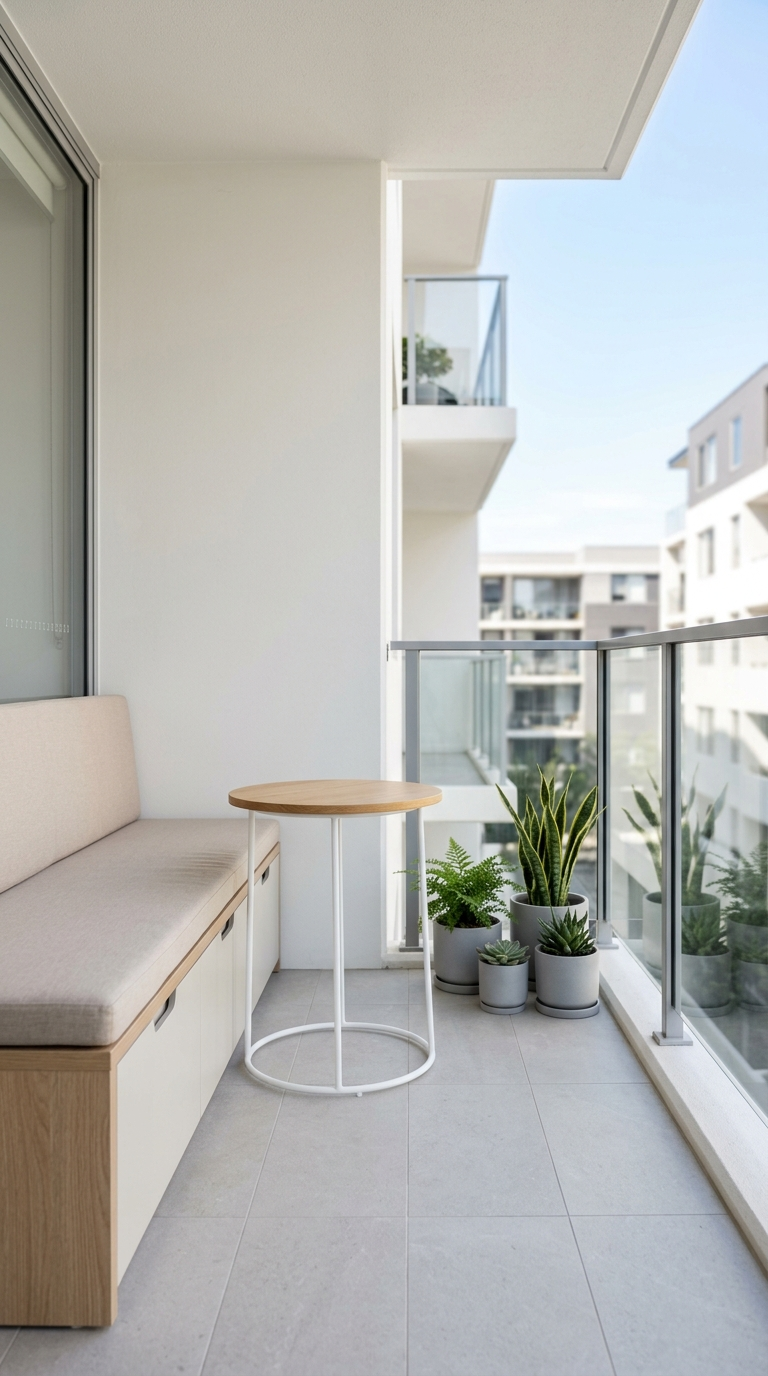
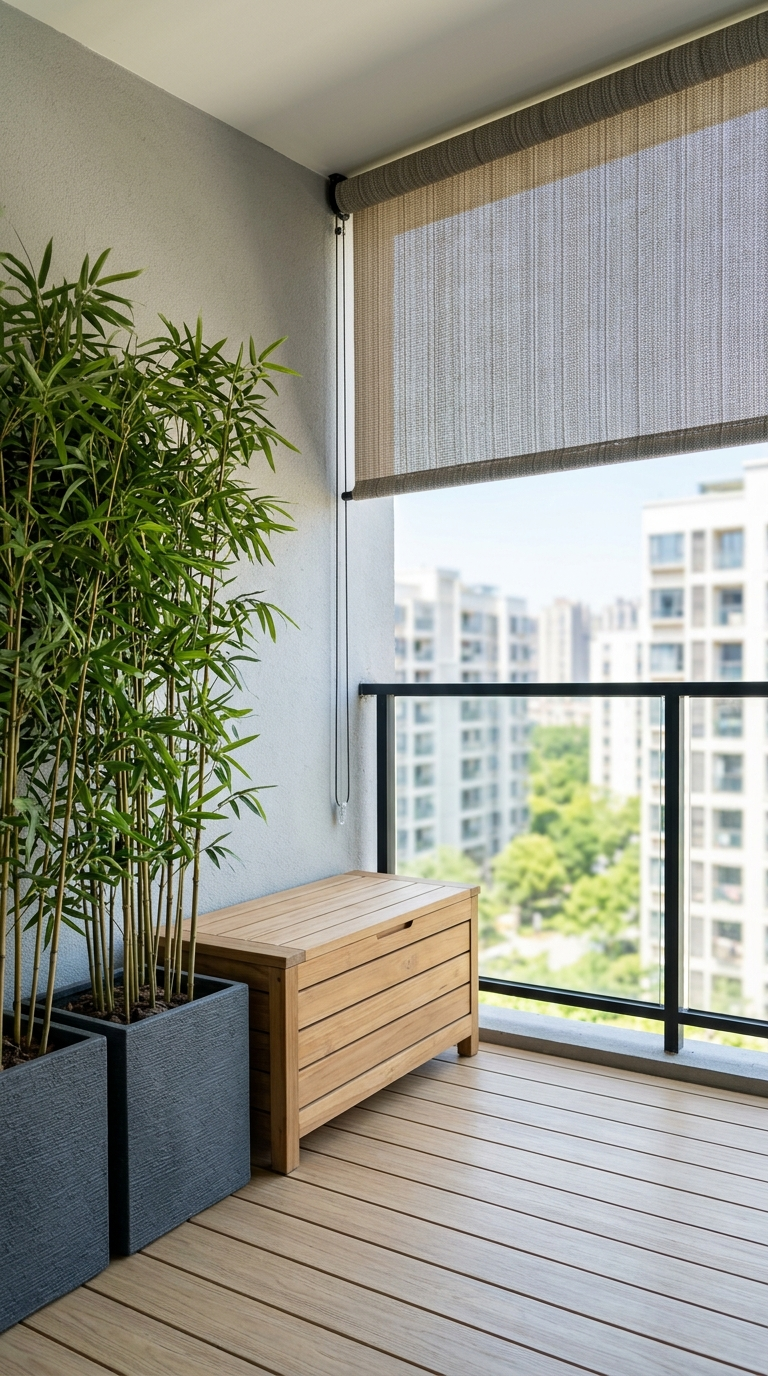
Select furniture scaled appropriately for your dimensions, prioritizing pieces that serve multiple purposes. A narrow bench with hidden storage underneath can function as seating, a plant display, and storage for cushions or gardening supplies. Foldable bistro tables and stackable chairs allow flexibility for different activities and can be stored away when not in use. Look for lightweight yet durable materials like powder-coated aluminum or weather-resistant resin that withstand outdoor conditions without excessive maintenance. Avoid oversized pieces that dominate the space; instead, opt for slim profiles and clean lines that maintain an open, airy feel even in tight quarters.
Consider vertical solutions such as wall-mounted folding tables or hanging chairs that free up floor space. A slim console table against the wall can hold plants or drinks while doubling as a work surface. When choosing seating, test comfort in person if possible, as you will spend extended time here. Neutral colors in light tones help the space feel larger and brighter, while weatherproof cushions in quick-dry fabrics ensure comfort without constant upkeep. The goal is furniture that enhances usability without overwhelming the limited square footage, creating a sense of calm rather than clutter.
Step 3: Maximize Vertical Space with Smart Gardening
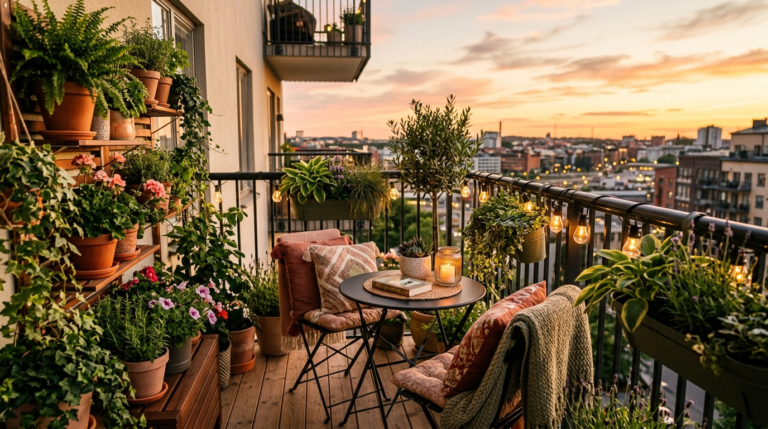
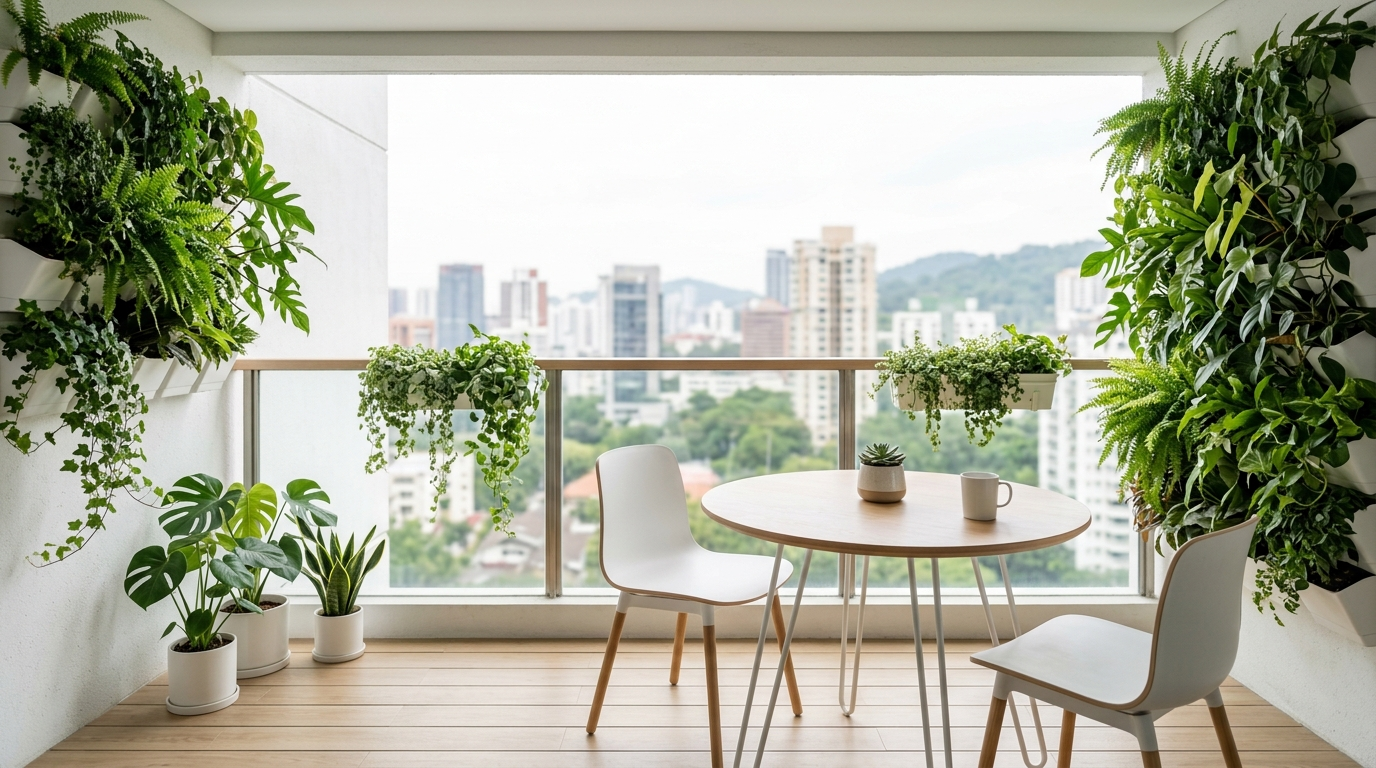
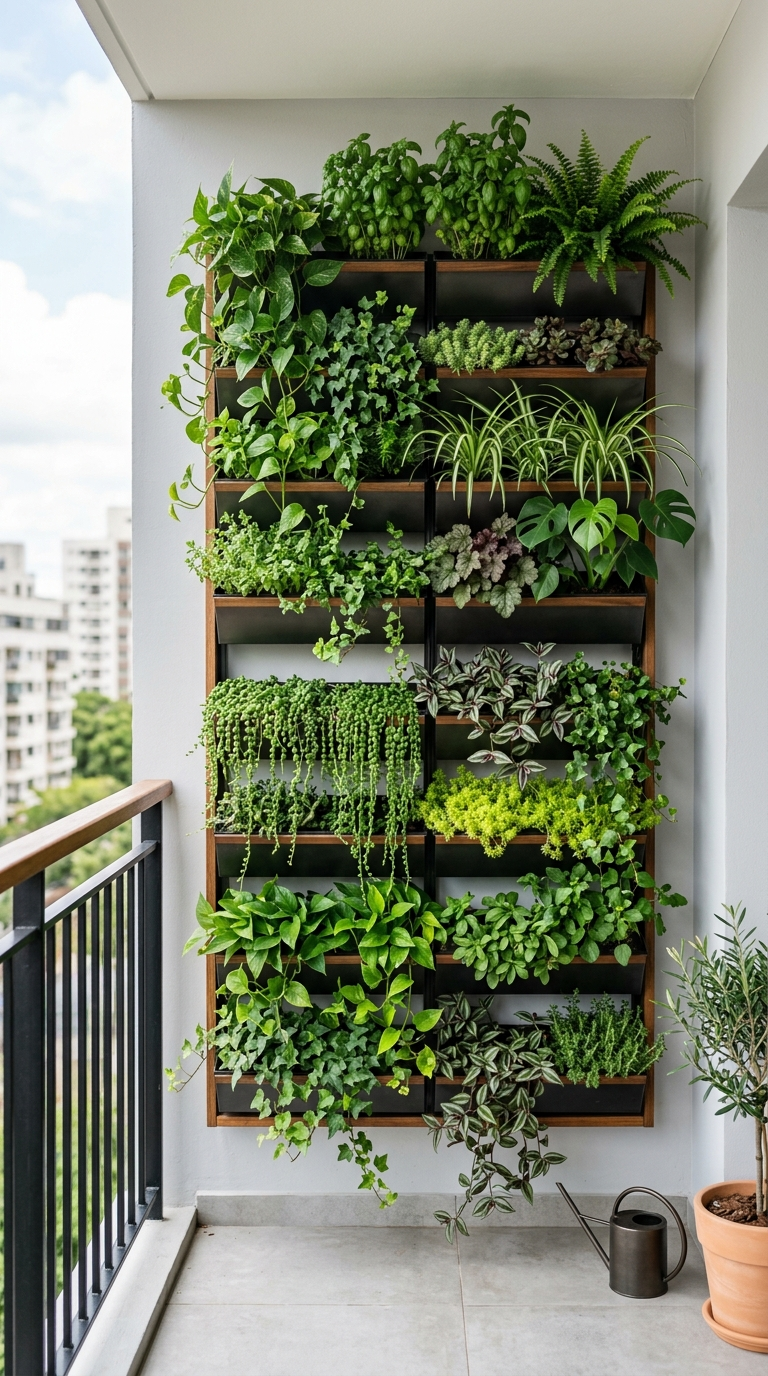
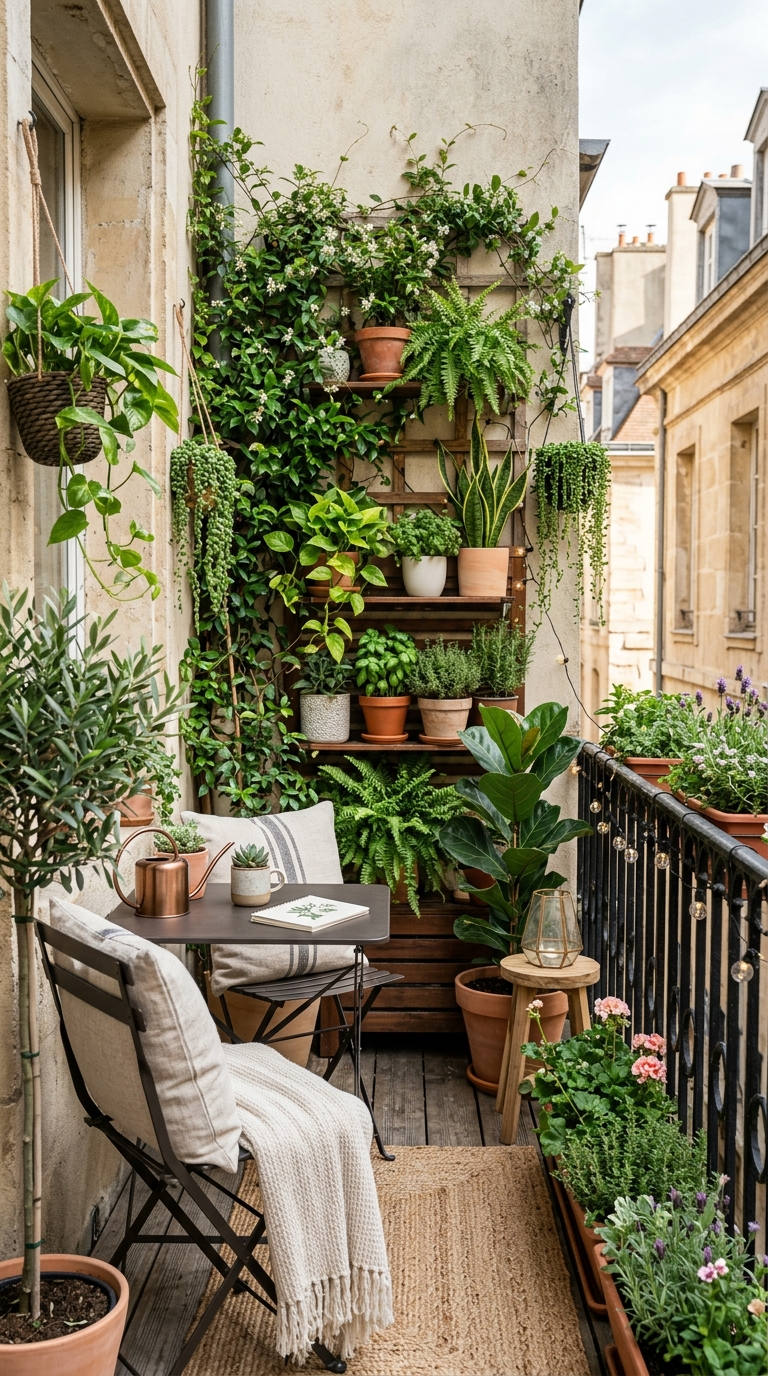
Vertical gardening transforms blank walls and railings into lush, living features that add beauty, privacy, and fresh herbs or flowers without consuming precious floor space. Install sturdy wall-mounted planters, hanging baskets, or railing-mounted boxes using weather-resistant materials and secure mounting hardware rated for outdoor use. Choose plants suited to your light conditions—trailing varieties like ivy or string of pearls for shaded areas, and flowering options or herbs like basil and rosemary for sunnier spots. Incorporate a mix of heights and textures for visual interest, and include a small watering can or drip system to simplify maintenance.
For added impact, consider a compact vertical garden tower or tiered plant stand that fits in a corner. These structures allow you to grow more in less space while creating a green backdrop that softens hard architectural lines. Ensure proper drainage to prevent water damage to floors or neighboring units, and select lightweight potting mixes formulated for containers. Regular deadheading and seasonal rotation keep the display fresh and healthy. This approach not only beautifies your small space but also improves air quality and provides a calming connection to nature that is especially valuable in dense urban environments.
Step 4: Layer Lighting for Evening Ambiance and Functionality
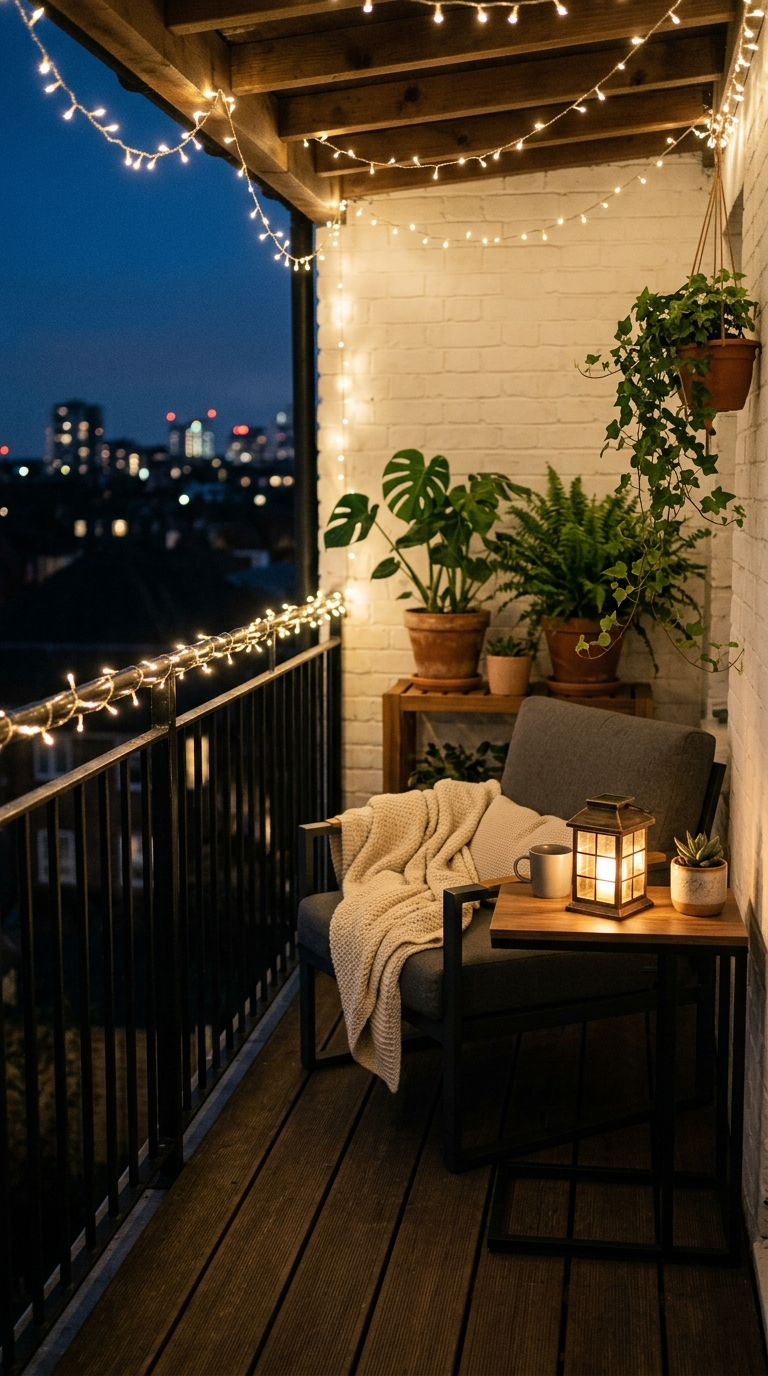
Good lighting extends the usability of your small outdoor space well into the evening and creates a magical atmosphere. Start with ambient options like string lights or solar-powered lanterns hung along the ceiling or railing for a soft, festive glow. Add task lighting with a small weatherproof table lamp or clip-on reading light for evening meals or books. Consider subtle accent lighting such as solar spotlights directed at plants or a wall-mounted sconce near the door for safety and style. Choose warm white bulbs to maintain a cozy, inviting feel rather than harsh cool tones.
Smart lighting controls or timers can automate the experience, turning lights on at dusk and off later to conserve energy. Battery or solar options eliminate the need for complex wiring in rental situations. Position lights to avoid glare on seating areas while highlighting attractive features like plants or architectural details. The right combination makes the space feel larger and more welcoming after dark, turning a simple balcony into a true extension of your indoor living area for relaxation or entertaining small groups.
Step 5: Add Weatherproofing, Textiles, and Personal Details
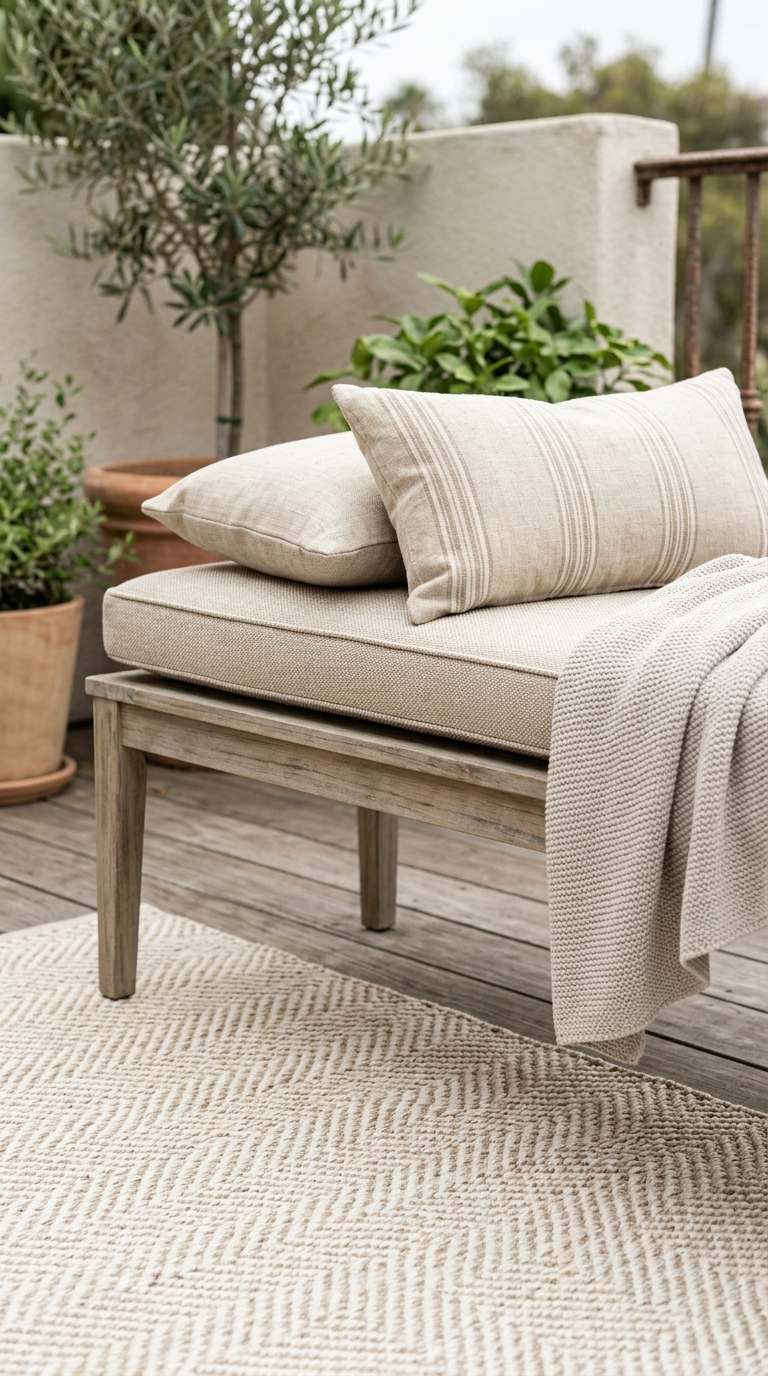
Protect your investment and enhance comfort with weather-appropriate textiles and accessories. Choose outdoor cushions and throws made from solution-dyed acrylic or quick-dry foam that resist fading, mildew, and moisture. Store them in a waterproof bench or deck box when not in use to prolong their life. Add a weather-resistant outdoor rug to define the seating area, provide warmth underfoot, and reduce noise. For privacy and wind protection, install roll-down shades, tall plants, or a freestanding screen in a complementary material.
Personalize with weatherproof decorative elements such as a small water-resistant artwork, a wind chime with a pleasant tone, or a compact side table holding a tray for drinks and books. Keep the overall palette cohesive with two to three main colors plus accents drawn from your plants. Regular cleaning and seasonal maintenance, such as tightening hardware before storms and bringing delicate items indoors during extreme weather, will keep the space looking fresh year after year. These finishing touches turn a functional setup into a true personal retreat that feels like an extension of your home’s personality and style.
Step 6: Maintain and Evolve Your Outdoor Oasis Over Time
Once complete, establish a simple maintenance routine to keep your balcony or small space thriving. Water plants consistently according to their needs, deadhead flowers, and prune as necessary to maintain shape and health. Clean furniture and surfaces regularly to prevent dirt buildup, and inspect hardware for wear after heavy weather. Rotate textiles and accessories seasonally to keep the look fresh and adapt to changing light or temperature conditions. Over time, you may discover new ways to use the space or wish to refresh certain elements—treat this as an ongoing creative process rather than a one-time project.
Document what works well and what you might adjust next season. Many people find that their small outdoor oasis becomes a favorite spot for both solitude and connection, whether enjoying morning light with coffee or watching the sunset with a loved one. By following these steps and adapting them to your specific space and lifestyle, you create a versatile, beautiful retreat that maximizes every square foot and brings daily joy. The transformation of even the tiniest balcony into a serene, functional oasis proves that thoughtful design can turn limitations into opportunities for beauty and relaxation right outside your door.