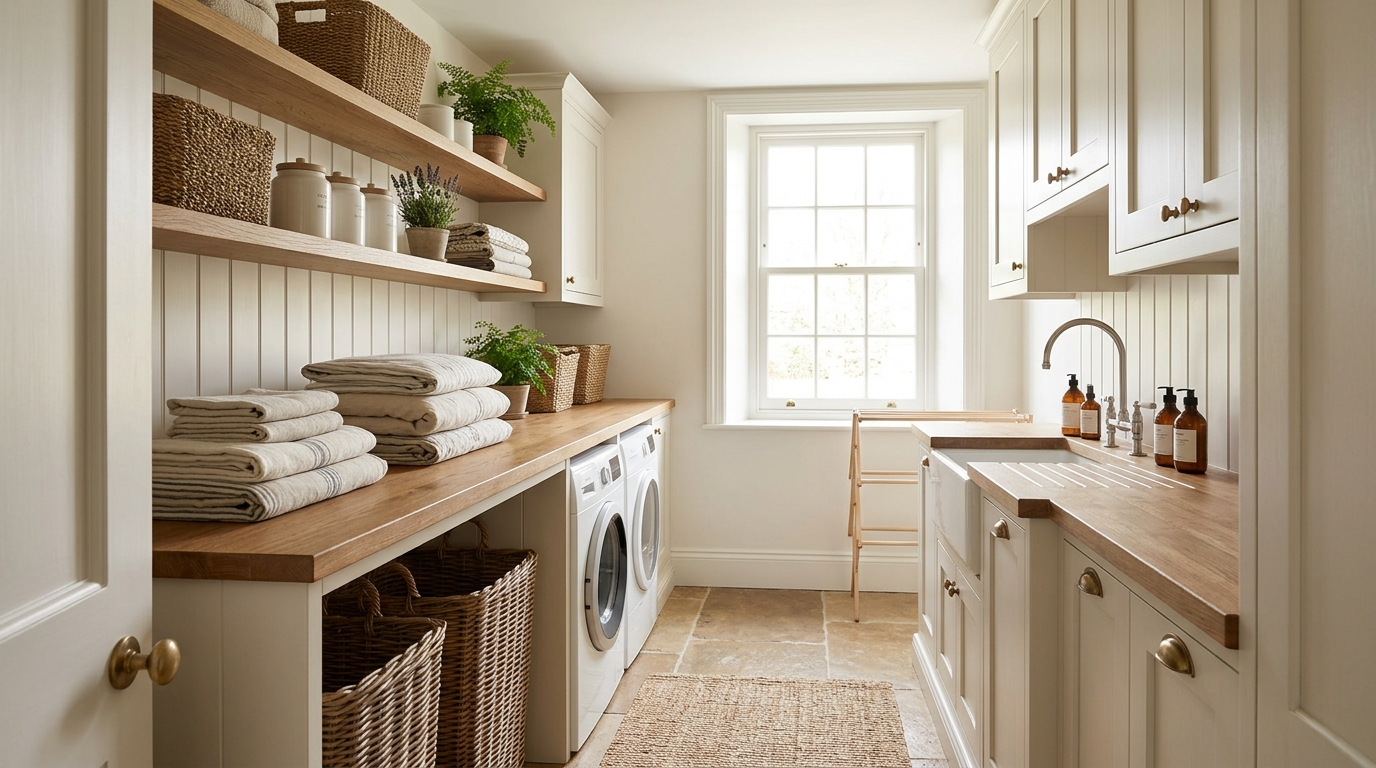
Laundry rooms have long been the forgotten workhorses of the home – purely functional spaces tucked away and designed with little thought beyond getting the job done. Yet with thoughtful planning, these rooms can become calm, organized sanctuaries that make the weekly chore feel less like a burden and more like a satisfying ritual. Whether you are carving out a small closet laundry or designing a generous dedicated room, the principles remain the same: prioritize functionality while infusing beauty and personality. This comprehensive guide will walk you through every step of creating a laundry room that works beautifully for your household and brings unexpected joy to the process of caring for your home and family.
Step 1: Assess Your Space, Needs, and Habits
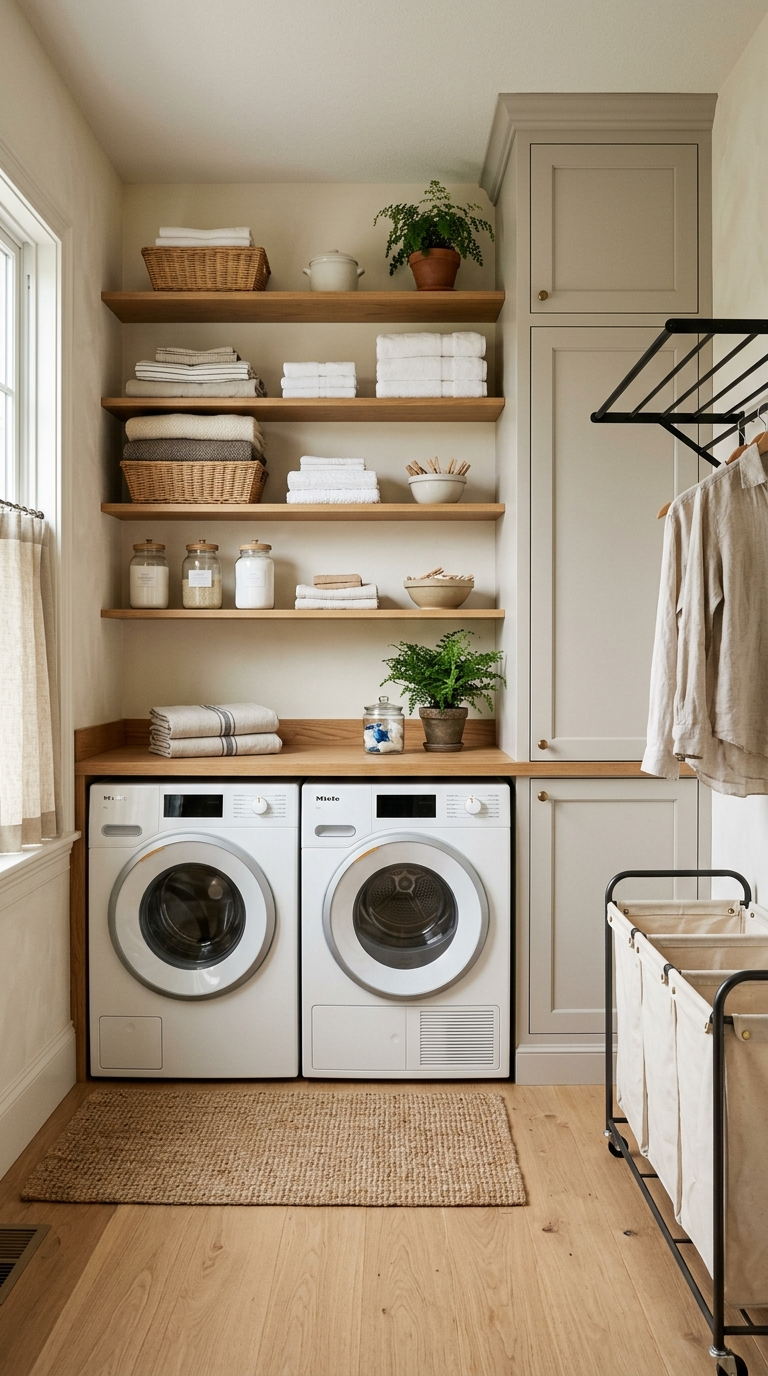
Before making any decisions about layout or finishes, take time to honestly assess how your household does laundry and what the space must accomplish. How many loads per week? Do you sort by color, fabric type, or household member? Do you have delicate items that require special care or air drying? Are there pets or sports uniforms that create extra volume or specific needs? Understanding your actual habits and pain points will guide every subsequent choice and prevent you from creating a beautiful space that does not actually serve your real life.
Measure the available space carefully, noting windows, doors, electrical outlets, plumbing access, and any existing storage. Consider traffic flow – will people be walking through the room to reach other areas, or is it a true dead-end space? Think about how you want to move through the laundry process from sorting to washing to drying to folding to putting away. The most successful laundry rooms support this natural workflow with logical zoning rather than forcing you to crisscross the space unnecessarily. Take photos and make notes about what currently frustrates you about your laundry routine; these observations are gold when it comes to designing solutions.
Step 2: Plan an Efficient Layout and Flow
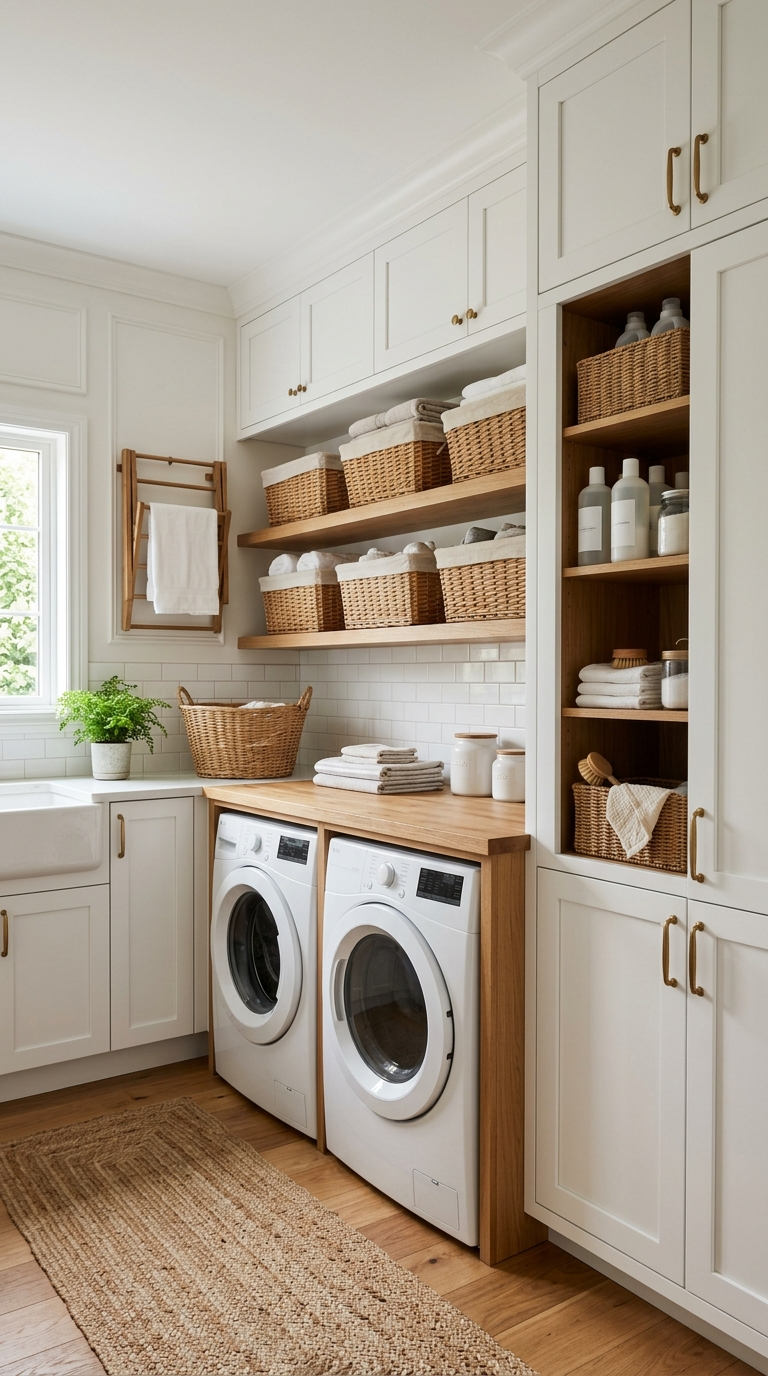
With your needs assessment complete, begin sketching possible layouts. The classic work triangle of washer, dryer, and folding surface remains useful, but adapt it to your specific space and workflow. In a linear room, place the washer and dryer side by side with a folding counter above or beside them. In an L-shaped space, the machines can anchor one leg while a generous folding and sorting station occupies the other. If space allows, consider separating the washer and dryer slightly to create a natural landing zone between them for moving wet items.
Always allow adequate clearance in front of machines for loading and unloading, and ensure doors can open fully without obstruction. If your machines are stackable or front-loading, you gain valuable floor space that can be used for storage or a folding surface. Consider the location of the sink if you have one – it should be easily accessible for pre-treating stains and filling buckets without requiring awkward reaching over machines. The best layouts feel intuitive, with each step in the laundry process flowing naturally into the next with minimal backtracking or wasted movement.
Step 3: Maximize Storage with Smart Solutions
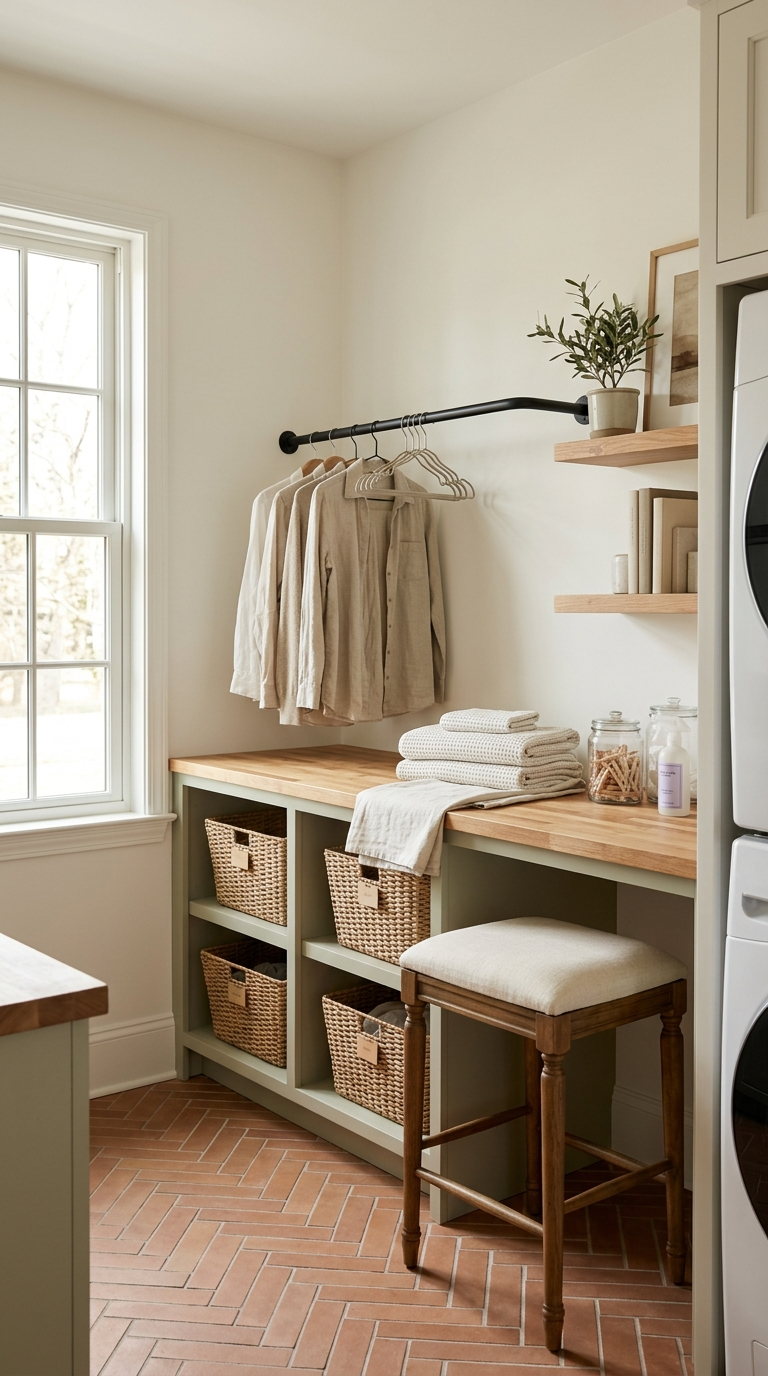
Storage is often the make-or-break element in a laundry room. You need space for detergent, stain removers, fabric softener, dryer sheets, cleaning supplies, lint rollers, and more, plus room for linens, towels, and seasonal items if the room serves double duty. The key is to think in zones: everyday laundry supplies near the machines, cleaning products in a dedicated cabinet, and overflow or seasonal items on higher shelves or in labeled bins.
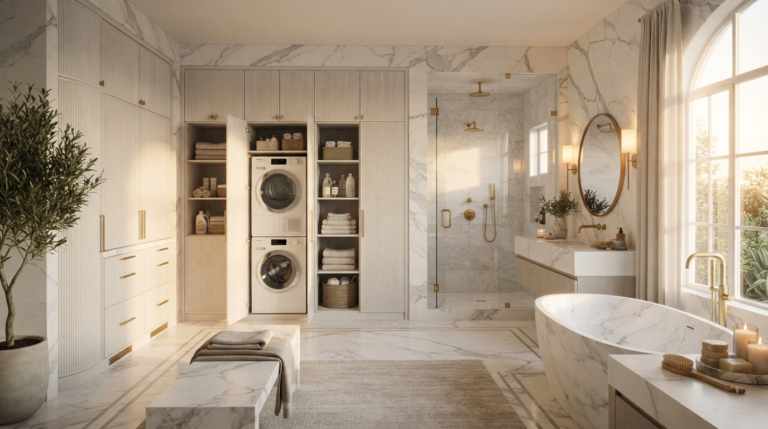
Wall-mounted cabinets above the machines provide excellent storage without consuming floor space. Open shelving can hold attractive baskets or bins for easy access to frequently used items. A tall narrow cabinet or pantry-style unit can house brooms, mops, and bulk supplies. Consider pull-out shelves or drawers for heavy items like detergent so you are not lifting them from high shelves. If you have a sink, a cabinet below can hide plumbing while providing storage for buckets and cleaning tools. The goal is to have a designated home for everything so the room stays organized and peaceful rather than becoming a catch-all for household clutter.
Step 4: Incorporate a Generous Folding and Sorting Station
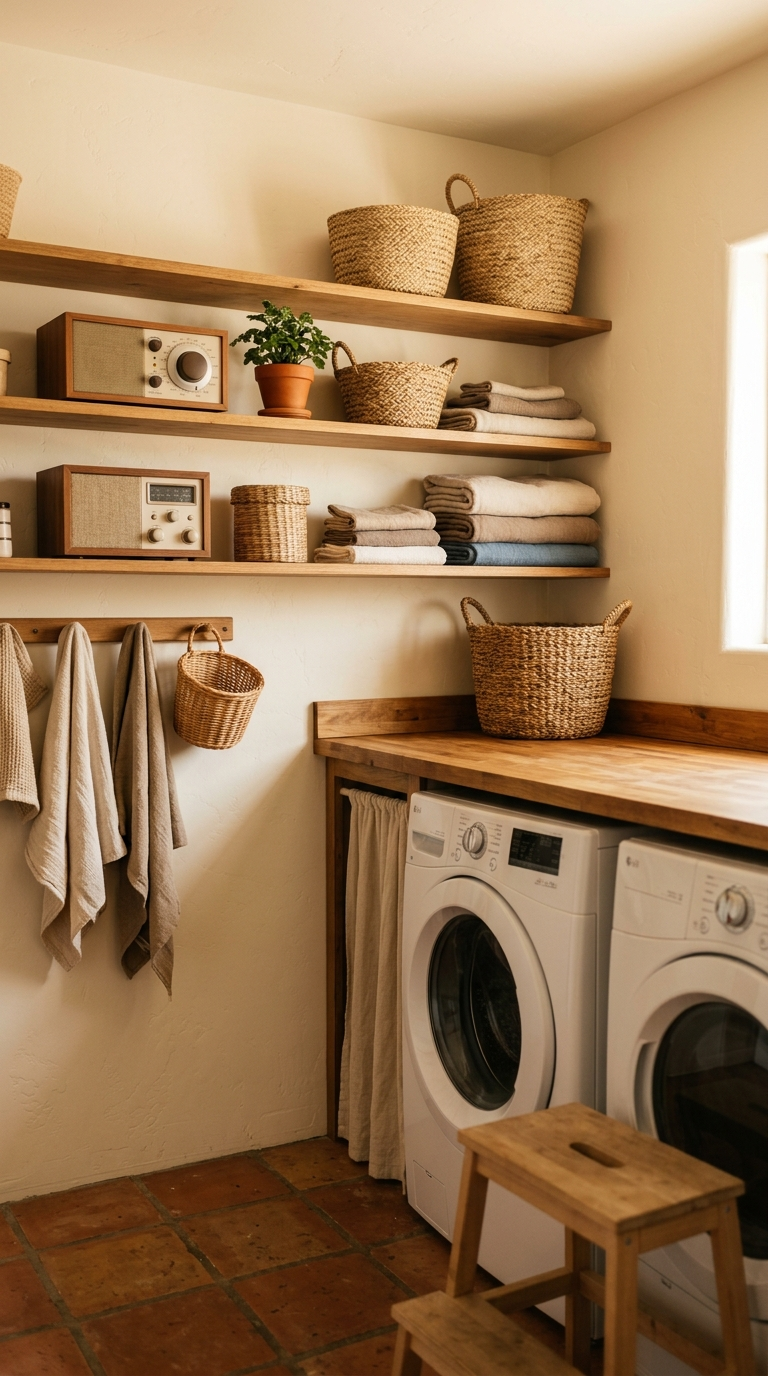
A dedicated surface for folding and sorting transforms the laundry experience. Ideally, this counter should be at a comfortable working height – typically 36 inches – and deep enough to handle a full load of laundry spread out for sorting and folding. Some of the most successful designs include a counter that runs the full length of the room or wraps around a corner, providing ample space even when multiple loads are in process.
Consider adding a hanging rod above or beside the folding surface for items that need to air dry or be hung immediately after drying. A small shelf or peg rail nearby can hold hangers at the ready. If space allows, a built-in or freestanding island or table dedicated to folding creates a pleasant workspace and can double as a sorting surface when needed. The folding station should feel inviting rather than cramped, with good lighting and perhaps a view out a window or into another room to make the task more enjoyable.
Step 5: Layer Beautiful Lighting and Ventilation
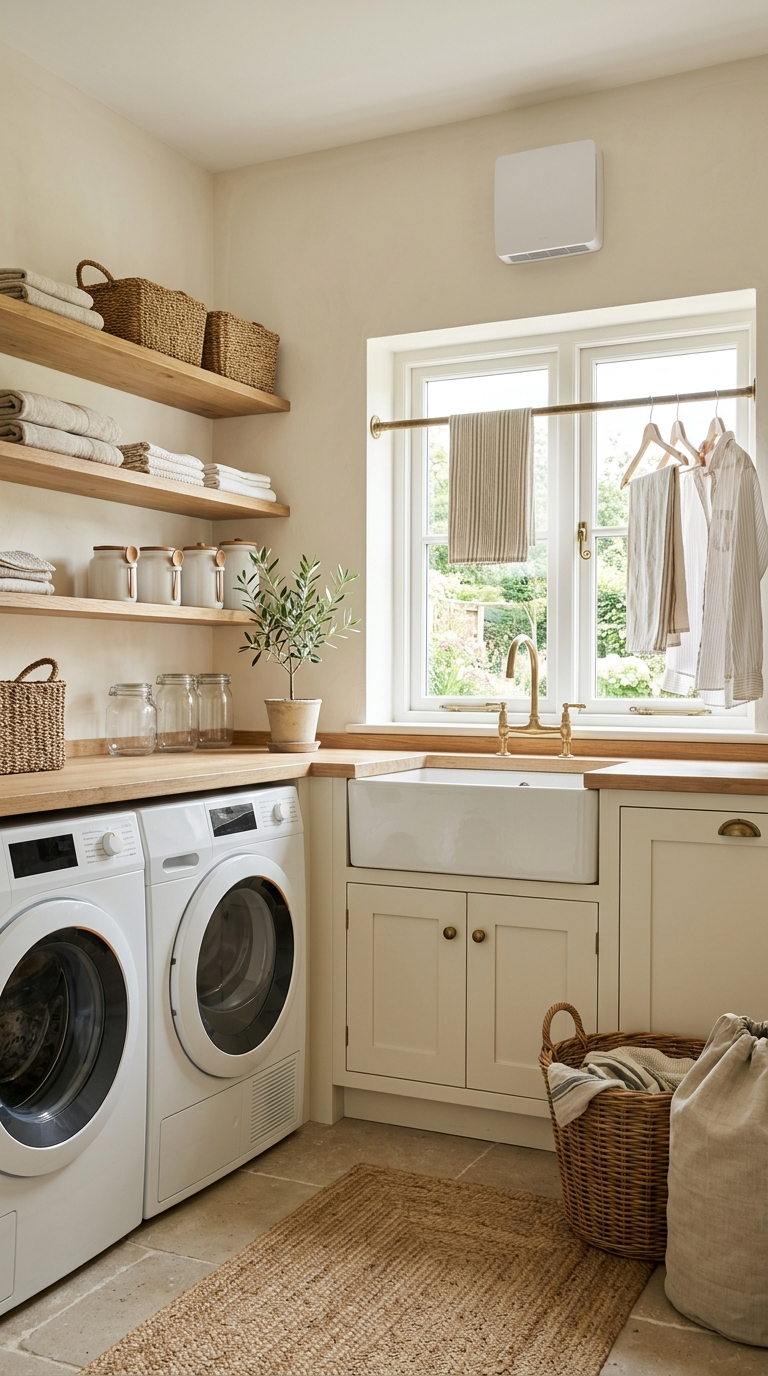
Good lighting is essential in a laundry room for spotting stains, reading care labels, and creating a pleasant atmosphere. Layer ambient lighting from a ceiling fixture with task lighting over the folding surface and machines. If the room has a window, maximize natural light with light-colored window treatments or none at all if privacy allows. For rooms without windows, consider a skylight or light tube if structurally feasible, or invest in high-quality LED fixtures that provide bright, even illumination without harsh shadows or glare.
Ventilation is equally important for both comfort and the longevity of your machines and finishes. Ensure your dryer is properly vented to the exterior and that the room has adequate air exchange. A quiet but powerful exhaust fan helps remove humidity and lint from the air. If your laundry room also serves as a mudroom or pet area, good ventilation becomes even more critical. The combination of excellent lighting and fresh air makes the space feel cared for and pleasant to spend time in, rather than a dim, stuffy utility closet.
Step 6: Add Warmth, Personality, and Finishing Touches
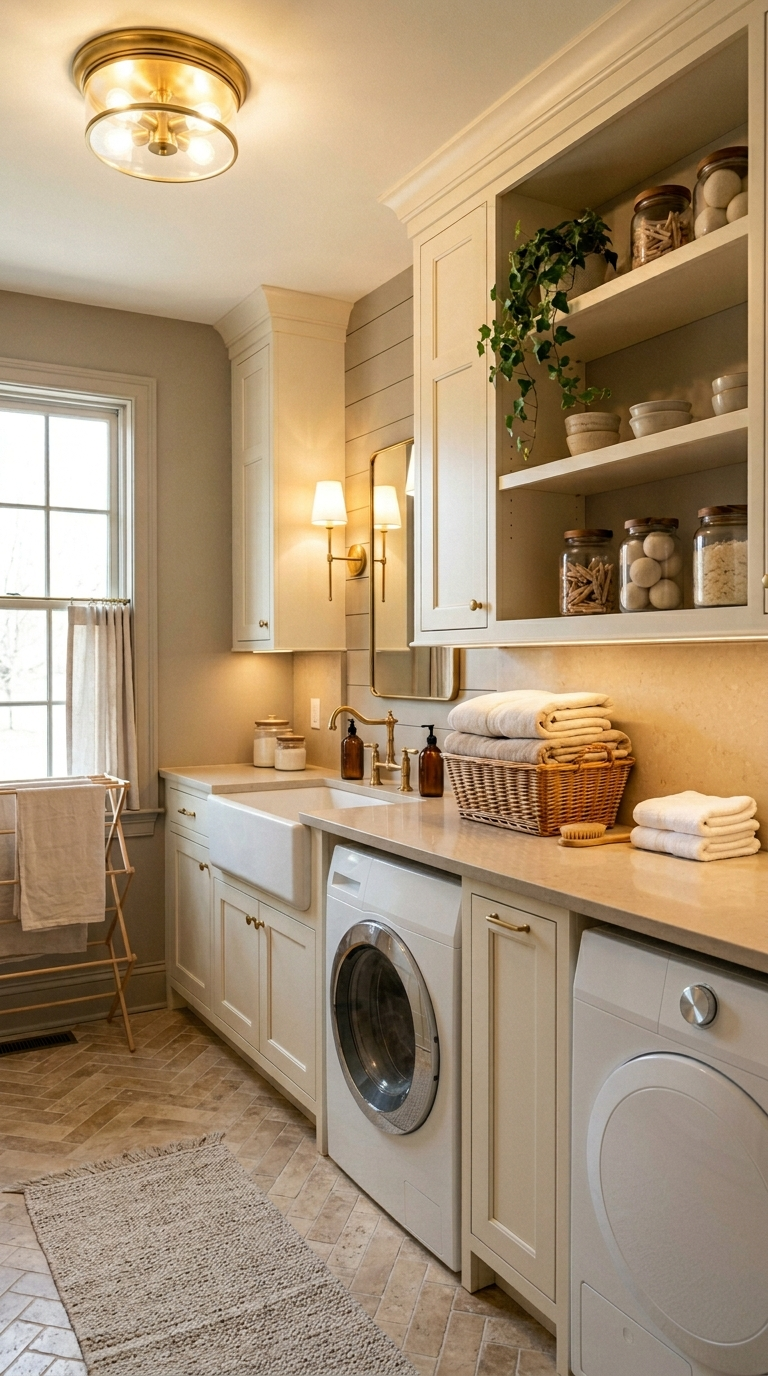
Once the functional elements are in place, it is time to infuse the space with warmth and personality that makes laundry feel less like a chore. Choose a color palette that feels calm and inviting – soft neutrals, gentle greens, or warm grays paired with natural wood tones create a soothing backdrop. Add texture through woven baskets, linen or cotton curtains, and a washable rug that provides cushion underfoot and absorbs sound.
Consider a small radio, speaker, or even a small television mounted on the wall to make folding time more enjoyable. A comfortable stool or chair can provide a place to rest between loads. Plants that tolerate humidity, such as ferns or snake plants, bring life and improve air quality. Artwork, a pretty clock, or a small collection of objects that make you smile can transform the room from purely utilitarian to a space you are genuinely happy to enter. The finishing touches are what turn a well-planned laundry room into one you might actually look forward to using.
Finally, establish simple systems that help maintain the order you have created. Clear labels on bins and shelves, a small wastebasket for lint and tags, and a dedicated spot for items that need special treatment all contribute to long-term success. With thoughtful design and a few personal touches, your laundry room can become a calm, efficient, and surprisingly delightful space that supports your household beautifully for years to come. The weekly laundry will never be glamorous, but it can be far more pleasant – and that is a transformation worth investing in.